What Is a Transponder Key, and Does Your Car Have One?
A transponder key is a car key with a small microchip sealed inside the plastic head. The chip answers a radio signal from your car, and the engine starts only if that answer matches. So what is a transponder key actually solving? Theft. A copied metal blade can turn the ignition, but without the right chip the car stays dead. Nearly every vehicle sold in the United States since the late 1990s uses one. If your key head is thick and a cheap copy will not crank the engine, you have a chipped key.
The short answer
A transponder key carries a passive microchip that exchanges a coded signal with your car’s immobilizer. No matching code, no start. The chip has no battery, and no hardware store machine can copy it.
What Is a Transponder Chip in a Car Key?
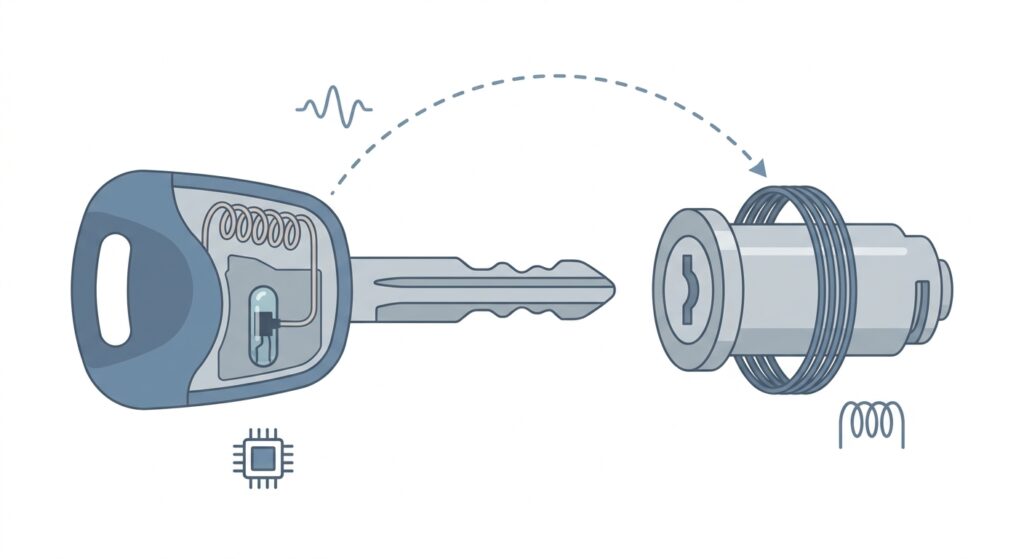
So what is a transponder chip in a car key? It is a passive radio tag, roughly the size of a grain of rice, with no battery and no moving parts. A coil of wire wrapped around your ignition cylinder pushes out a low power radio field every time you turn the key. That field wakes the chip, and the chip answers with a code.
Your car’s immobilizer module compares that code against the ones it has stored. Match, and the module lets the fuel injectors and starter do their jobs. No match, and the engine cranks but never catches, or the starter never turns at all.
How the Chip and the Immobilizer Talk
The exchange takes a fraction of a second and runs at 125 kHz on most vehicles. Texas Instruments, whose DST transponders sit in millions of Ford and Toyota keys, describes the process as a challenge and response. The car sends a random number, the chip runs it through an internal key, and the chip sends back the result.
None of that lives on the metal. Cut a perfect copy of the blade and you have copied none of it.
What Is a Transponder Chip Key Made Of?
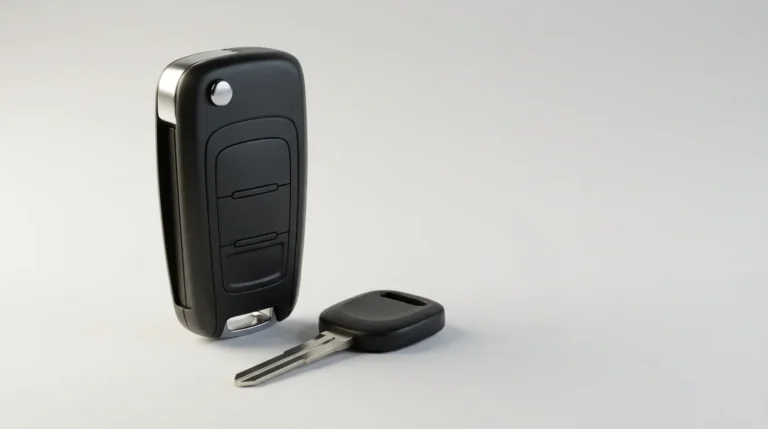
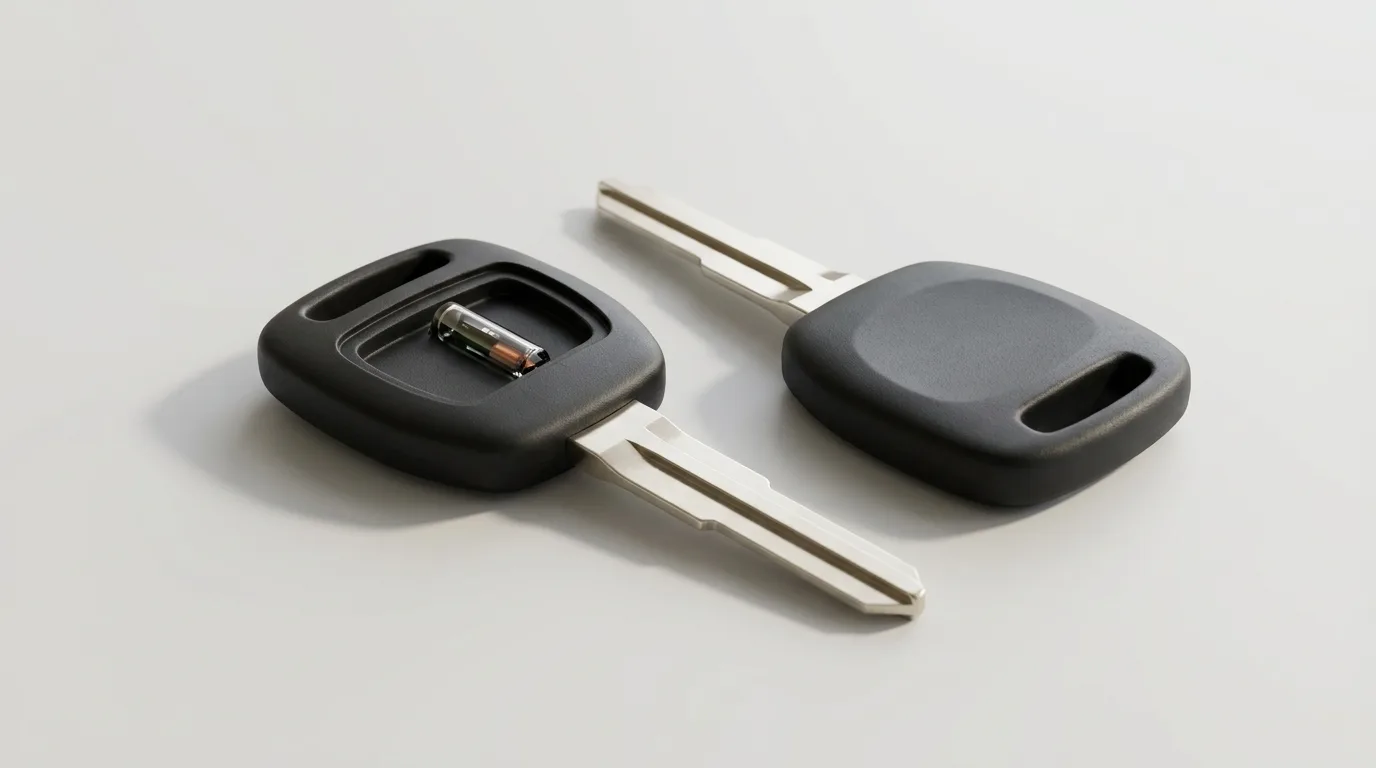
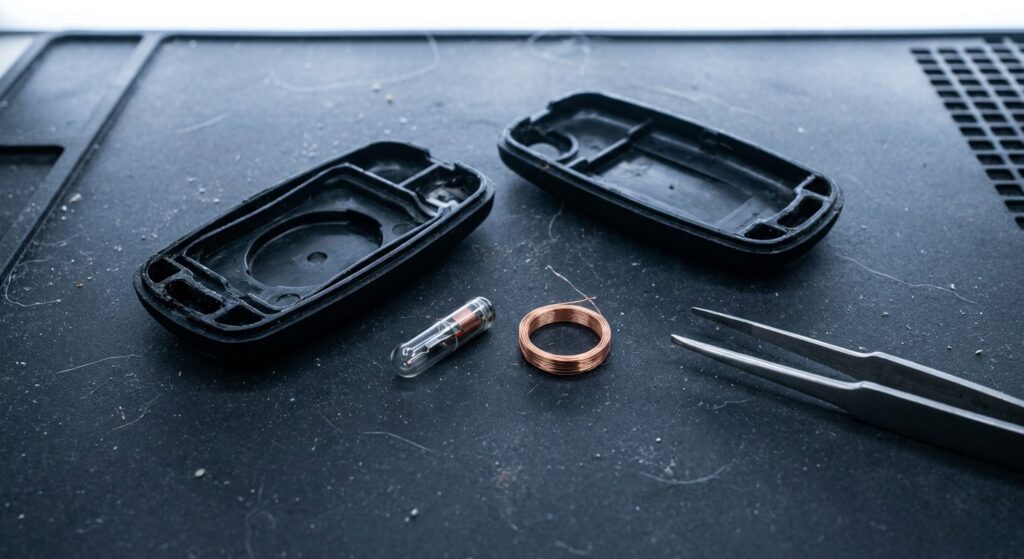
A transponder chip key is an ordinary cut blade attached to a plastic head that hides the electronics. Inside that head sits either a glass capsule chip or a flat carbon chip on a small board, wrapped by a coil antenna. The plastic is ultrasonically welded shut, which is why a head cracks instead of opening.
Older designs hid the capsule in a round pocket near the shoulder of the blade. Newer remote head keys share the housing with buttons, a circuit board, and a coin cell that powers the remote functions only.
How Does a Transponder Key Work, and Where Is the Chip?
The chip sits inside the plastic head of the key. When you turn the key, an antenna ring around the ignition sends a weak radio signal. The chip answers with its own code. If the car’s immobilizer knows that code, the engine starts. A copied transponder car key with no chip will turn the lock but never start the engine.
Does Your Car Have a Transponder Key?
If your car is a 1999 or newer model sold in the United States, assume yes. Does my car have a transponder key is really a model year question, and the year answers most of it. Manufacturers phased immobilizers in over roughly a decade, and the exact cutoff shifts by badge, platform, and sometimes trim.
What is a transponder key for a car built before 1995? Usually nothing at all, because the technology had not reached mass production yet.
Model Years by Manufacturer
Manufacturer | System name | Chipped keys common from |
|---|---|---|
Ford, Lincoln, Mercury | PATS | 1996 on many models, near universal by 1999 |
General Motors | Passlock, PASS-Key III | 1997 to 2002, varies by platform |
Toyota, Lexus | TMIS | 1997 on Lexus, most Toyota by 1999 |
Honda, Acura | Immobilizer System | 1997 to 2001, varies by model |
Chrysler, Dodge, Jeep | Sentry Key | 1998 forward |
Nissan, Infiniti | NATS | 1997 forward |
Volkswagen, Audi | Immobilizer II | 1995 to 1998 |
Treat the table as a starting point, not a verdict. Your owner’s manual lists the system under security or anti theft, usually in the first twenty pages.
How Do I Know If I Have a Transponder Key?
Do I have a transponder key? Four checks answer it in under a minute.
Still asking does my car key have a transponder? Read your VIN to the parts counter at any dealer. They can pull the original key type off the build sheet in about a minute, no appointment needed.
The Main Types of Transponder Chips
So what are transponder keys protecting against? Casual theft, mostly, and the industry kept raising the bar as thieves caught up. Federal theft prevention rules under 49 CFR Part 541 and steady pressure from insurers pushed chipped ignitions across nearly every showroom floor through the 2000s.
Once you know what is a transponder key at the basic level, the next question is which generation sits in your hand. That generation decides how a replacement gets made and what it costs.

Chip type | How it works | Typical era | What a new key needs |
|---|---|---|---|
Fixed code | Sends the same ID every time | 1995 to 2002 | Onboard procedure or shop equipment |
Rolling code | ID advances on a set sequence | 2000 to 2010 | Diagnostic equipment, vehicle present |
Encrypted (Megamos Crypto, Hitag2) | Runs a challenge and response calculation | 2005 forward | Equipment plus a manufacturer key code |
Proximity fob, push button start | Chip plus two way radio in the fob | 2007 forward | Equipment, vehicle, often all keys present |
The trend runs one direction. Each generation made the key harder to reproduce outside a shop with the right tools and the right paperwork.
Do Transponder Keys Have Batteries?
No. The chip itself is passive and carries no battery. It draws the trace of power it needs from the radio field your ignition coil produces. That is why a chip still answers after a spare key has sat in a kitchen drawer for ten years.
The confusion comes from remote head keys and fobs. Buttons for lock, alarm, and trunk run on a coin cell, usually a CR2032 or CR2025. When that cell dies the buttons stop and the chip keeps working. Put the key in the ignition and the car starts normally.
Can a Transponder Key Go Bad?
Yes, though the chip is rarely the part that quits. The chip has no moving parts and nothing to wear. What fails is everything around it: solder joints on a carbon chip, the antenna coil, a cracked head that lets the capsule shift out of position, and a worn blade that no longer seats deep enough in the cylinder.
How Long Do Transponder Keys Last?
Most chips outlast the car. Fifteen to twenty years is normal, and glass capsule chips often run longer than that. The blade wears out first. Brass grinds against steel wafers thousands of times, and a key cutting your ignition since 2009 is measurably thinner than the day it left the machine. When a key needs jiggling, blame the cuts, not the electronics.
Heat does more damage than age. A key left on a dashboard through a Lowcountry August sits in a cabin that can pass 140 degrees. Repeat that for a few summers and the epoxy holding a carbon chip in place starts to release.
Water, Humidity, and Salt Air
Are transponder keys waterproof? Water resistant is closer to the truth. A trip through the washing machine often survives, provided the key dries fully before anyone turns it in an ignition. Tidal water is a different story, because salt stays behind after the water evaporates and keeps working on the coil solder.
That matters across Dorchester County. Salt air rides inland from the coast, and spring pollen coats everything from Old Trolley Road to Cane Bay in a yellow film that works its way into ignition cylinders. A gritty cylinder holds the key slightly off center, which weakens the radio handshake before a single electrical part has failed.
What Replacing or Duplicating One Actually Involves
Cutting is the easy half. Pairing is the half that needs equipment and paperwork.
Why a Hardware Store Copy Will Not Start Your Car
A hardware store duplicator copies the shape of a blade. It has no way to write anything into a chip, and no connection to your car’s immobilizer. The copy will open your doors and turn the ignition, and the engine will not run. That is the system doing its job, not a defect in the copy.
What to Have Ready Before a New Key Is Cut
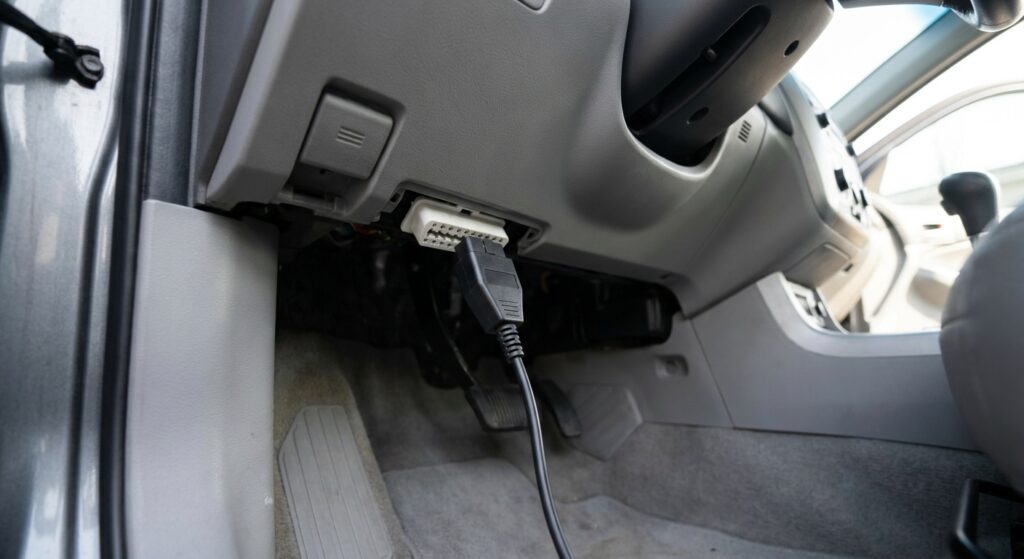
Some vehicles allow a third key to be added when two working keys are already in hand. Many do not, and several makes require a manufacturer key code released only after an ownership check. Those checks are standard practice, and the people who would actually show up should be able to explain theirs before you book anything.
A specialist who works on car keys every day can tell you which category your vehicle falls into before anyone touches it. If your key carries buttons, or you drive a push button start car, getting a fob paired to your vehicle is a related but separate job. What key work typically costs tracks the chip generation far more than the drive time.
What to Do When the Key Stops Starting the Car
Work through this order before you decide the key is finished.
- Try the spare. If the spare fires the engine, the fault sits in the first key.
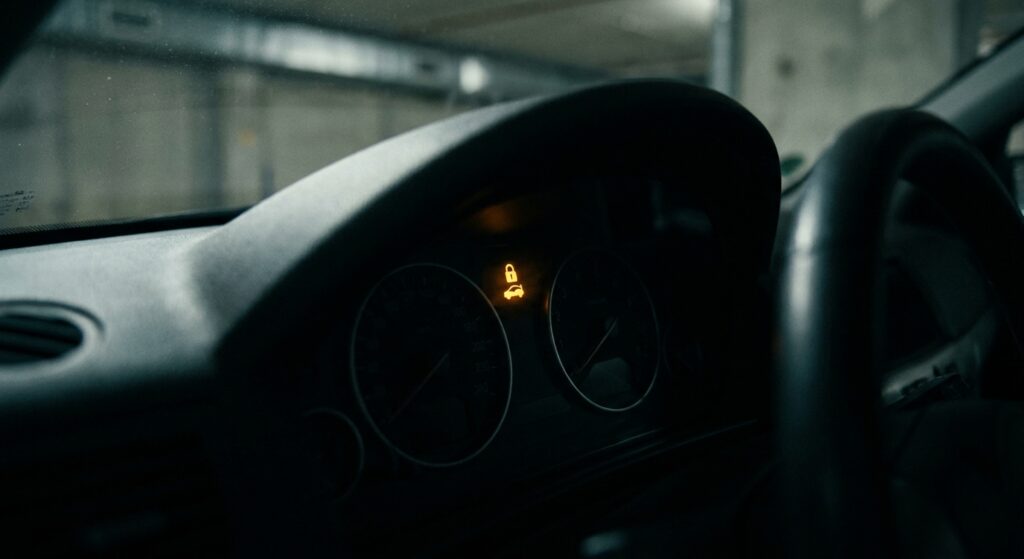
- Watch the security light. A blinking immobilizer icon points at the chip handshake. A dead dash points at the battery.
- Check battery voltage. A weak battery can crank slowly and still fail the immobilizer check, which looks exactly like a bad key.
- Test the cylinder. If the key must be held at an angle or pulled back a hair, the wafers are worn.
- Inspect for damage. A cracked head or a hairline fracture near the blade shoulder ends the guessing.
Stop before the fifth try
Repeated failed attempts push some immobilizers into a timed lockout that runs ten to fifteen minutes. Help after hours when a car will not start is worth a call before you keep turning the key.
Frequently Asked Questions
Chipped Car Keys and Local Help in the Lowcountry
Knowing what is a transponder key answers half the problem. The other half is finding someone who can cut and pair one without your car going on a flatbed. Humid summers and salt air are hard on ignition hardware around here, and a key that worked fine in April can start failing by August. Our team is background-checked, trained, bonded, and insured, and the programming equipment travels to your driveway. Mobile car key service across the area covers most makes from 1996 forward.
Not sure we reach your street? See the streets and subdivisions we cover, send your VIN and model year ahead, or start with local key and lock help.