How to Remove a Broken Key in a Door Lock
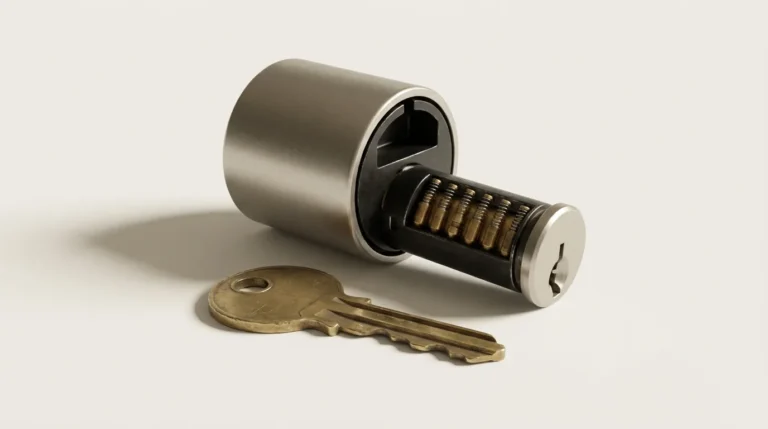
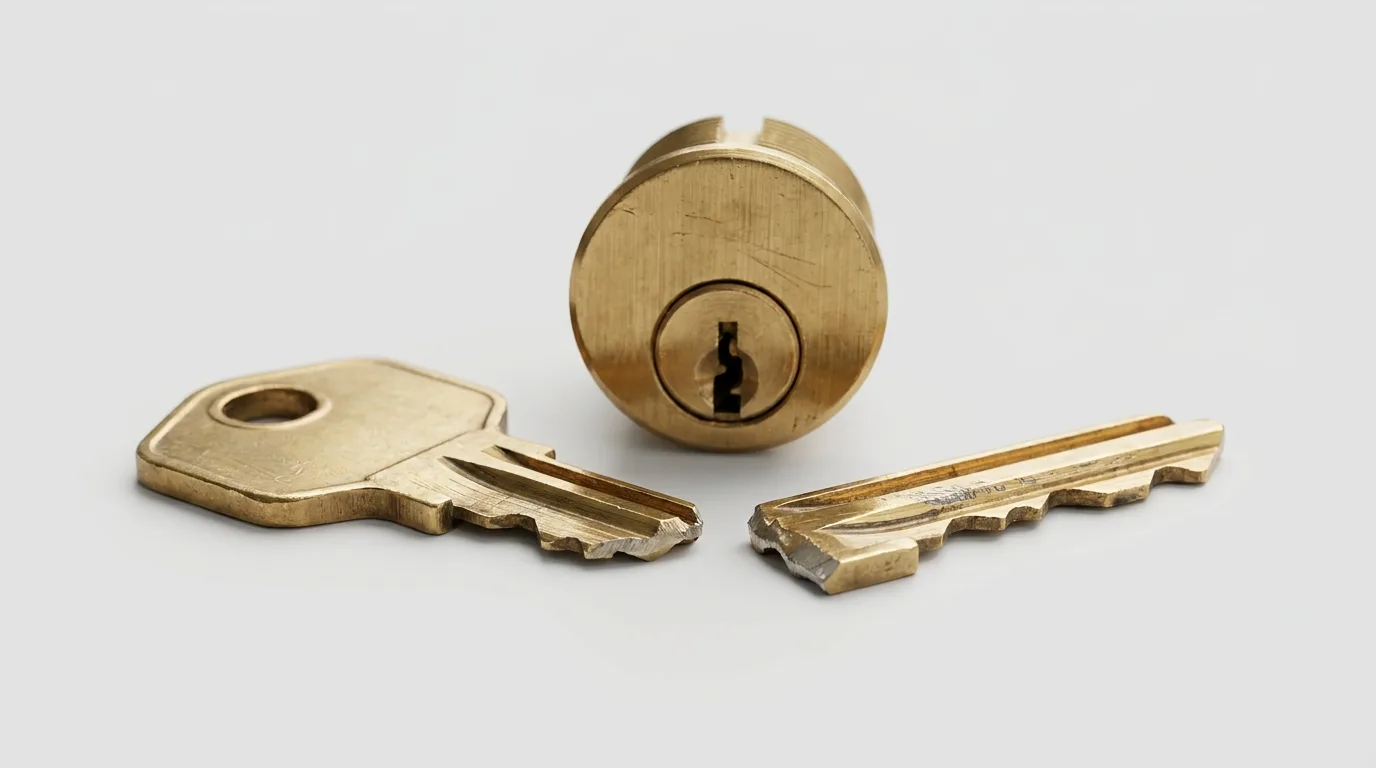
If you need to know how to remove a broken key in a door lock, start with the visible stub. Grip it with needle nose pliers and pull straight out with steady pressure. If nothing sticks out past the face of the cylinder, use a broken key extractor or a thin jigsaw blade to hook the key and draw it forward. Never turn the plug while the piece is inside. That drives the metal deeper.
How Do You Get a Broken Key Out of a Lock?
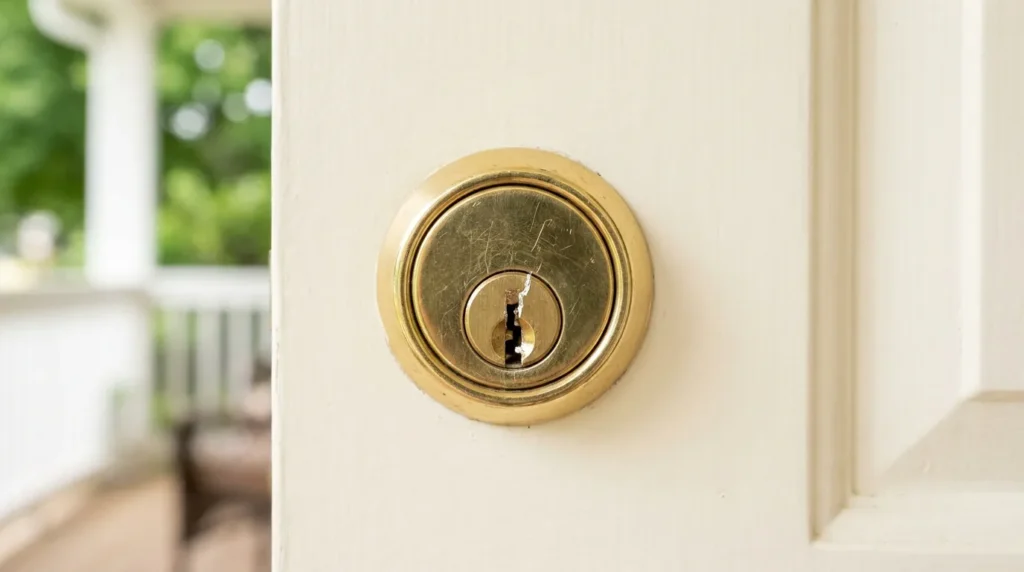
To get a broken key out of a lock, first turn the plug back to the straight up position. That lines up the pins so the piece can slide out. If the stub sticks out, grip it with needle nose pliers and pull straight back. If it sits flush in the keyhole, slide a thin key extractor or a jigsaw blade along the top of the key. Hook the cuts and pull slowly. Never push a second key in on top of it.
What Should You Do the Moment a Key Breaks Off?
Stop touching the lock. The first thirty seconds decide whether this is a ten minute fix or a cylinder replacement.
Do these things first
Do not do these things
A key that snapped clean usually comes out in one try. A key that twisted and sheared inside the plug often does not.
Is the Key Jammed or Actually Broken?
People searching how to get a jammed key out of a lock often have an intact key that will not slide back out. That is a different problem with a different fix. A jammed key is whole and stuck. A broken key is in two pieces, and one of them is inside the cylinder.
Signs the key is only stuck, not snapped
A stuck key almost always means the plug is not fully rotated back. Turn the key gently to the straight up position, then pull. Keys only exit at that one angle. If it still will not move, powdered graphite or a dry PTFE lubricant helps. Give it a minute to work down the pin chambers.
How to Remove a Key Broken Off in a Lock, Step by Step
Three methods cover almost every case. Work through them in order. Each needs the plug sitting straight up, the same position the key goes in at.
Method 1: Needle nose pliers when the stub is visible
Use this only if metal sticks out past the face of the cylinder. Anything less and the jaws will push the piece inward.
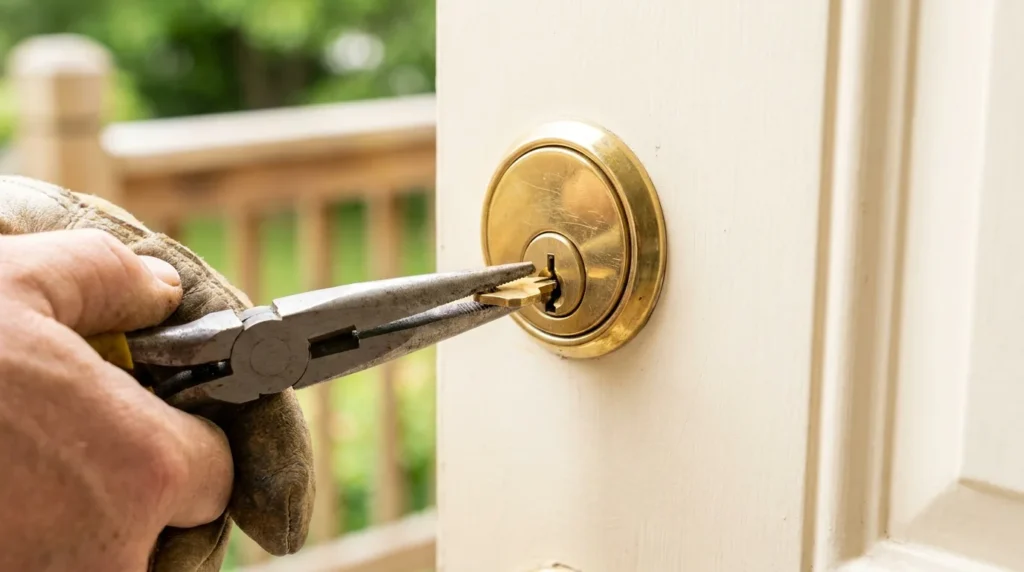
Thin needle nose jaws beat standard pliers. Tweezers rarely have the strength.
Method 2: Using a broken key extractor tool
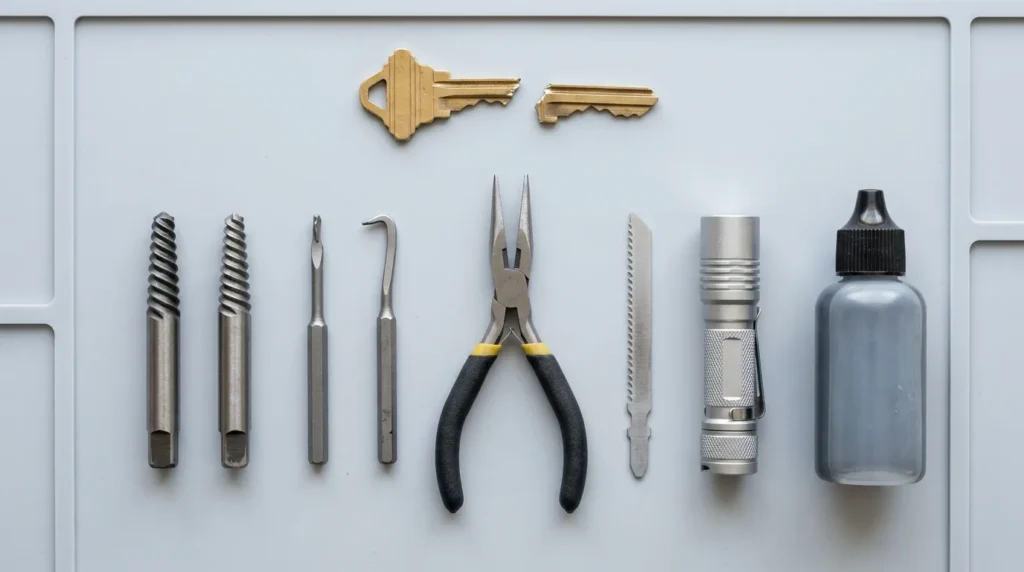
This is what professionals reach for, and the tools cost under twenty dollars online. An extractor is a thin steel strip with a barbed hook along one edge.
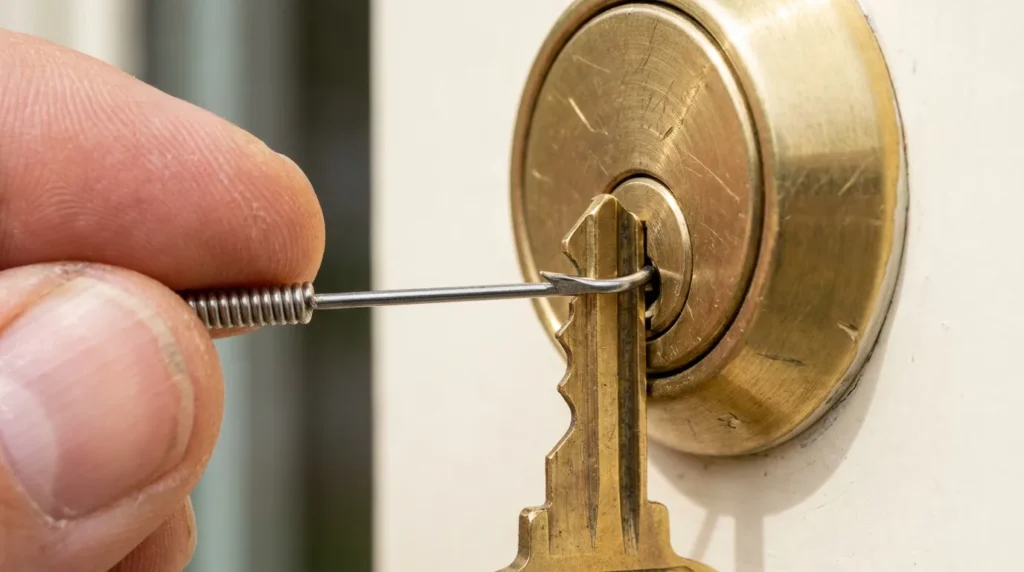
Spiral extractors twist into the cuts. Single hook models grab one notch. Buy a set with both, because a key that broke once signals a worn key or a worn cylinder.
Method 3: The jigsaw blade method
A fine tooth jigsaw or coping saw blade works when you have no extractor. The teeth act as the barb.
Wear gloves. Blade teeth and a bare hand in a doorway turn this into a first aid problem.
Should You Ever Use Super Glue?
No. Glue on a bit of wire looks clever in videos and fails in real doorways. The bond needs clean, dry, well mated surfaces, and a broken key face is none of those. When it fails, adhesive cures inside the pin chambers. That turns a fifteen minute extraction into a cylinder replacement.
Which Method Fits Your Situation
Situation | Best method | Tools needed | Typical time | Risk of damage |
|---|---|---|---|---|
Stub sticks out past cylinder face | Needle nose pliers | Pliers, dry lubricant | 2 to 5 minutes | Low |
Key flush with the keyway | Broken key extractor | Extractor set | 5 to 15 minutes | Low |
Key sunk below the face | Extractor, two passes | Extractor set, flashlight | 10 to 20 minutes | Moderate |
No extractor available | Jigsaw blade | Fine tooth blade, gloves | 10 to 20 minutes | Moderate |
Key sheared while turning | Call a pro | None | Same day service | High if attempted |
Plug will not rotate at all | Call a pro | None | Same day service | High if attempted |
The last two rows matter most. A key that broke under rotational force often bent a pin or the plug. Pulling on it can shear the metal a second time inside the cylinder.
How Do You Open a Door When the Key Broke Off Inside?
If the door is locked and the key snapped inside, your fastest route in is another door or window, not the damaged lock. Check the back door, the garage keypad, and any window you left unlatched. Ask whoever holds the spare.
If the deadbolt is already retracted and only the fragment is stuck, the door still opens by hand. Deal with the key at your own pace.
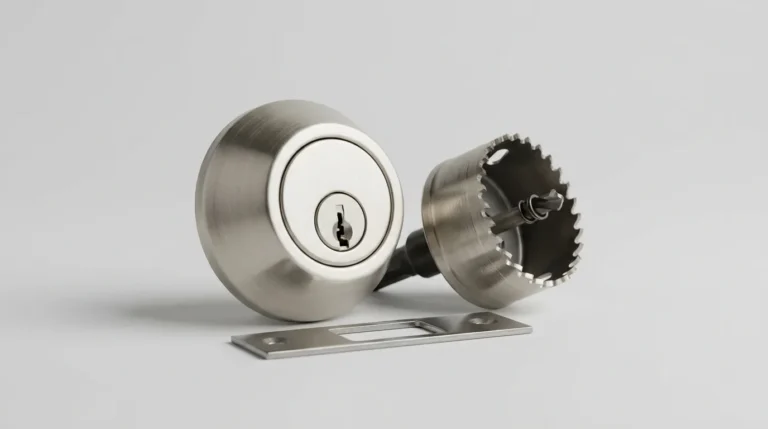
Do not try to defeat the lock yourself. Drilling looks simple in a video and rarely goes that way. A miss ruins the cylinder and sometimes the door. Extraction costs a fraction of a replacement. A trained technician can usually get you back inside without harming the door when extraction fails.
Key Snapped in a Front Door Lock or Deadbolt
A key that broke off in a front door lock or deadbolt comes out the same way. What changes is the risk. If the key snapped while the deadbolt was locked, the door stays shut until the piece is out. If the broken piece sits deep in the barrel, tools from the front may not reach it. A locksmith can take the cylinder out of the door and open the plug to free it.
Broken Key in a Car Door Lock or Door Knob
A broken key in a car door lock is harder to reach. Car locks use thin wafers and a tight keyway, so a slim extractor works better than pliers. If the key broke in the ignition, do not try to start the car with the piece. On a house door knob, the method matches a deadbolt. Keep both halves of the key. A locksmith can often cut a new key from them.
Why Keys Snap in the First Place
Keys break from metal fatigue, not one bad pull. Brass work hardens every time it flexes in a stiff lock. The cuts near the shoulder carry the most stress, which is why keys usually break there.
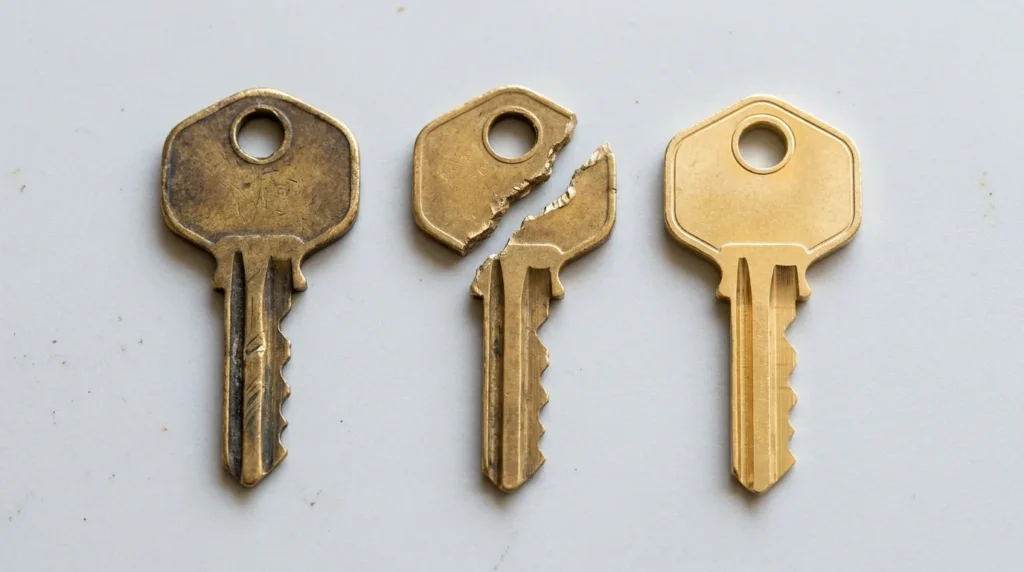
Common causes:
Local conditions add to it. Homes here in Summerville sit in humid, salty coastal air that corrodes brass pin tumblers and springs. Spring pollen packs into keyways and turns a smooth cylinder gritty in one season. Clay soil settling under a foundation shifts a door frame enough to misalign the strike plate, so people yank the handle while turning the key.
Older properties in the Historic District run original hardware with loose tolerances and worn wards. If a key breaks once on old hardware, expect it again. In that case a fresh cylinder and new keys usually cost less than repeat service calls on hardware that keeps failing.
Can You Still Use the Lock After a Key Breaks Off?
Sometimes. Once the fragment is out, insert your spare and turn the plug through a full cycle both directions. If it moves smoothly and the bolt throws normally, the lock is fine. If it catches or needs force, a pin is bent or debris sits in a chamber.
Blow out the keyway with compressed air, add powdered graphite, then cycle the key ten times. A cylinder that stays rough after that needs service. Never keep using the half that survived. Schlage advises against oil based lubricants in residential cylinders for the same reason.
Can a Locksmith Cut a New Key From the Broken Piece?
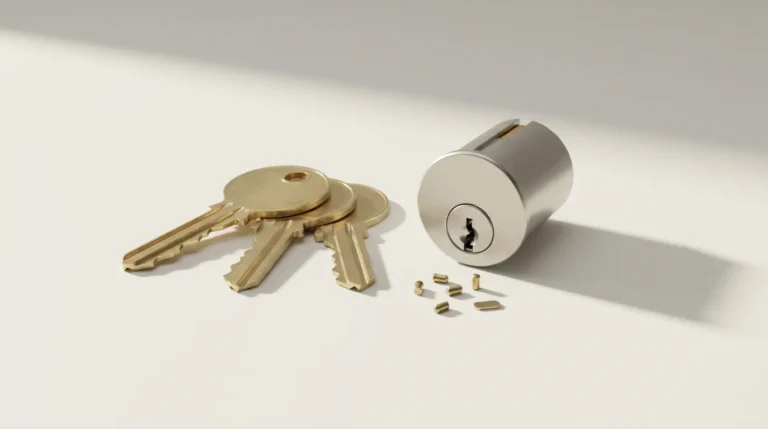
Often yes, if both halves exist and the cuts are readable. A locksmith decodes the depths from the fragments and cuts a new key by code. If only one half survived, they pull the cylinder, read the pin stack, and originate a key from the lock itself. That method costs more but works when nothing else does.
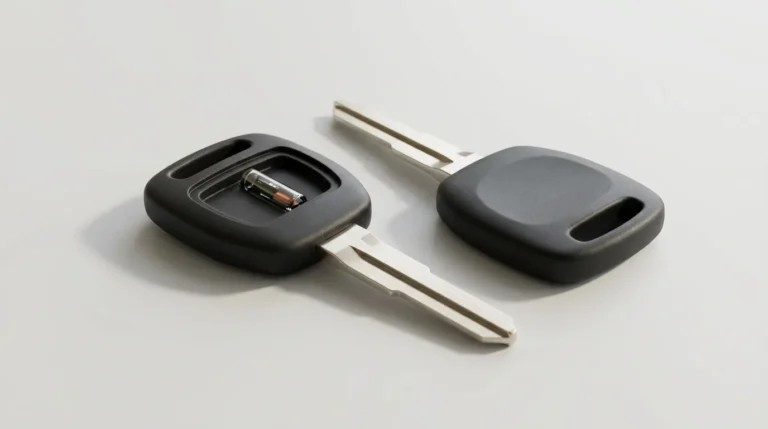
Car keys are the exception. A house key is purely mechanical, but most vehicle keys carry a transponder chip that has to be matched to the immobilizer, so cutting the blade is only half the job on a vehicle key.
How Much Does Broken Key Removal Cost?
Extraction alone typically runs 75 to 150 dollars for a standard residential lock during business hours. After hours and weekend calls add 50 to 100 dollars. Rekeying afterward runs 20 to 50 dollars per lock. Full cylinder replacement lands between 100 and 250 dollars depending on grade and brand.
Grade matters. An ANSI/BHMA Grade 1 deadbolt costs more to replace than a builder grade Grade 3 unit. Grade 1 hardware survives 250,000 cycles in testing, while Grade 3 is rated for 100,000. Those cycle counts come from the ANSI/BHMA A156 standards that manufacturers test against.
Ask three questions before work starts:
You can see what a service call actually runs before anyone drives out instead of guessing from a national average.
When to Stop and Call Someone
Stop DIY and get help when any of these apply:
Every extra attempt past that point costs more than the call would have. Across Dorchester County most extractions are same day work, and after hours calls get handled without an appointment.
Anyone entering your home should be background-checked, trained, bonded, and insured, and should show identification first. Our standards for every technician who shows up are published in full.
Frequently Asked Questions
Broken Key Help Across the Summerville Area
A key snapping off is a small failure with a fast fix, as long as it is handled before someone forces the plug. Knowing how to remove a broken key in a door lock covers most cases, and the rest need a technician with extraction tools and a key machine on the truck. Lowcountry weather is hard on lock hardware, so worn keys deserve attention before they break. Every technician is background-checked, trained, bonded, and insured, start with same day help for a door you cannot open.