What Is a Panic Bar on a Door? Crash Bars and Exit Devices Explained
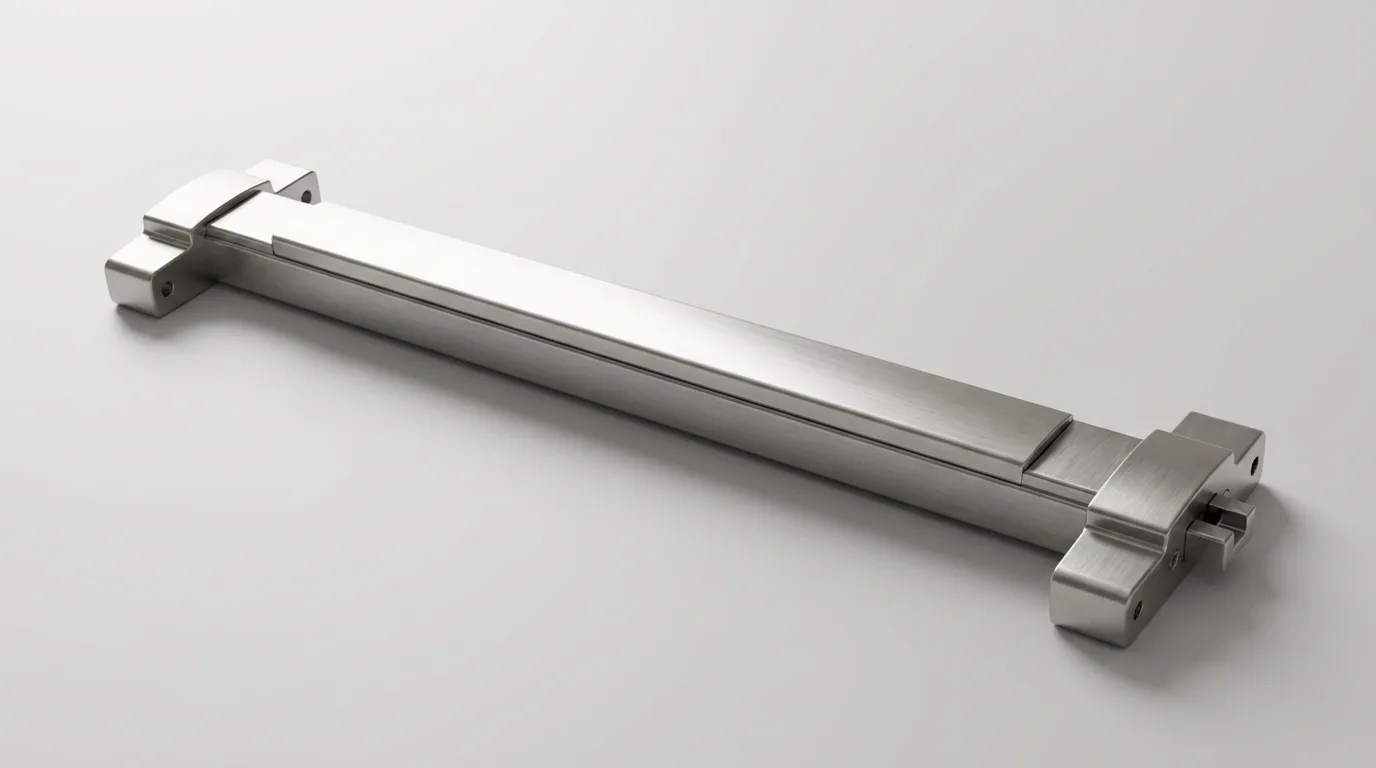
What is a panic bar on a door? It is a spring-loaded bar that runs across the inside face of a door and releases the latch when pushed. Push the bar, the latch retracts, the door opens. No knob, no turning, no thinking under pressure. Building codes require this hardware on exits in schools, theaters, restaurants, and other spaces that hold crowds. The trade calls them exit devices. Most people call them crash bars or push bars.
What Is a Panic Bar on a Door and How Does It Work?
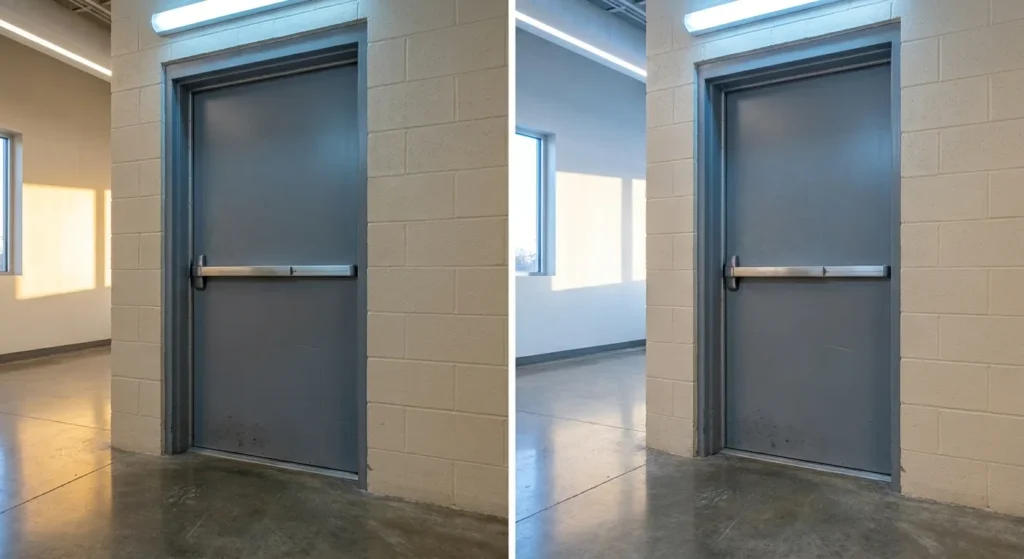
Panic bars on doors run on one idea: pressure in means way out. Someone pushes anywhere along the bar and the latch pulls back. A crowd moving toward the door does the work. Nobody has to find a handle.
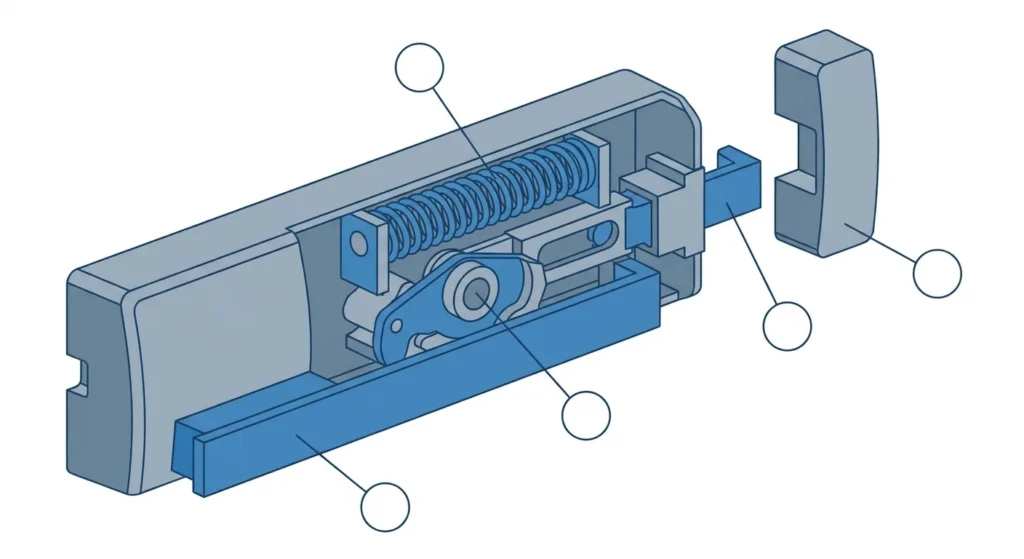
Inside the device, a touchpad or crossbar connects to a spring-loaded latch bolt. Pressure on the pad rotates a cam. The cam pulls the latch clear of the strike. Let go, and the spring pushes the latch back out. A panic bar in a door stays locked from the outside the whole time. That one-way behavior is the point.
Most devices also have a feature called dogging. A hex key holds the latch retracted so the door stays push-open all day. Staff dog the bar when the shop opens and undog it at close.
What Are Panic Bars on Doors Called in the Trade?
Suppliers and code officials say panic hardware or exit device. Von Duprin, Detex, Yale, and Sargent all use those terms in their catalogs. Ask three people what is a panic bar on a door and you may get three answers: crash bar, push bar, or crossbar. Same hardware, different vocabulary. Order an exit device by name and you will get the right part faster.
Crash Bar vs Panic Bar: Is There a Difference?
No. Crash bar, push bar, exit bar and panic bar all name the same thing. Building codes call it panic hardware. Makers like Von Duprin call it an exit device. A crash bar on a door usually means the round crossbar you hit with your hip. A push bar usually means the flat touchpad on most newer buildings. Both pull the latch back when you push toward the exit.
How Does a Panic Bar Work? The Parts Inside
A panic bar works by turning a push into a pull on the latch. Press the bar, and a linkage inside the case pulls the latch out of the strike. The door swings open with no knob or key. Let go, and springs push the latch back out.
The parts of a panic bar:
- Touchpad or crossbar: the part you push. It must cover at least half the door’s width.
- Mechanism case: the box near the latch side that holds the springs and linkage.
- Latch: one latch at the door edge on a rim device, or rods to the top and bottom on a vertical rod device.
- Strike: the metal catch on the frame.
- Outside trim: a lever, pull or key cylinder for getting in from outside. Exit only doors have none.
- Dogging: a hex key or key cylinder that holds the latch back during open hours. Fire doors cannot use mechanical dogging.
The Four Types of Exit Devices
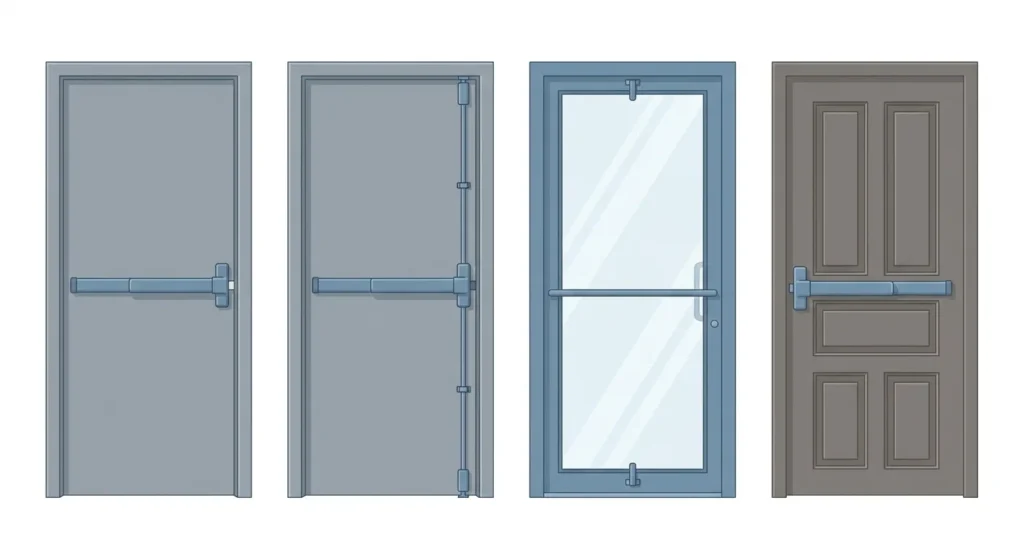
Four device styles cover almost every commercial opening. The door material, the frame, and whether the opening is single or a pair decide which one fits.
Rim Device
The latch mounts on the surface of the door and catches a strike on the frame. Rim devices suit single doors and pairs fitted with a removable mullion.
Surface Vertical Rod
Two rods run up and down the face of the door and latch at the header and the sill. The rods sit in the open, which makes adjustment simple and damage easier.
Concealed Vertical Rod
Same latching idea, but the rods hide inside the door. Cleaner look, higher price, and service means taking the door apart. Aluminum storefront doors often run this style.
Mortise Device
The lock body sits in a pocket cut into the edge of the door. Mortise devices carry the most weight and last the longest. They need a door prepped for them.
Device type | Best fit | Typical device cost | Service difficulty |
|---|---|---|---|
Rim | Single doors, pairs with mullion | $250 to $700 | Easy |
Surface vertical rod | Door pairs, no mullion | $400 to $900 | Easy |
Concealed vertical rod | Glass and aluminum doors | $600 to $1,300 | Hard |
Mortise | Heavy doors, high traffic | $700 to $1,500 | Moderate |
Grade matters as much as style. ANSI/BHMA A156.3 Grade 1 devices are built for one million cycles. Grade 2 stops at 500,000. Any door the public touches should get Grade 1, and most hardware upgrades on storefront and office openings start there.
When Does a Door Legally Need a Panic Bar?
Code sets the trigger, not preference. The International Building Code, Section 1010.2.9, calls for panic hardware on doors serving assembly (Group A) and educational (Group E) spaces with an occupant load of 50 or more. High-hazard (Group H) rooms need it at any occupant load.
NFPA 101, the Life Safety Code, sets the assembly threshold at 100 occupants. Your building follows whichever code the jurisdiction adopted, so ask the local building department before you buy anything.
One trigger catches owners off guard. NEC 110.26(C)(3) requires panic hardware on electrical equipment room doors where the equipment is rated 800 amps or more. Plenty of small commercial buildings hit that number without anyone noticing.
A restaurant seating 60 needs it. A four-person insurance office does not. If your occupant count sits near the line, the fire marshal makes the final call.
What Height Should a Panic Bar Be?
A panic bar must sit between 34 and 48 inches above the floor. That rule comes from the International Building Code. South Carolina enforces the 2021 edition, in force since January 1, 2023. The push side must also reach across at least half of the door. Older buildings may keep hardware that met the code when it went in. Your local building official has the final word. Replacing a device? Measure the old one and the door width before you order, since exit devices are sold by door size.
Panic Hardware vs Fire Exit Hardware: What Is the Difference?
Fire exit hardware is panic hardware that also carries a fire rating. Both are tested to UL 305 for panic release. Fire exit hardware adds UL 10C testing as part of a rated fire door assembly.
The working difference is dogging. Fire exit hardware has no mechanical dogging, because a fire door has to stay latched to hold back smoke and flame. If a device on a labeled fire door has a hex dogging hole, somebody ordered the wrong one. Check the metal label on the door edge before you shop.
Who Sells Panic Bars for Glass Doors, and What Actually Fits?
Aluminum storefront doors need narrow stile hardware, which is a different shopping list. Adams Rite builds devices sized for stiles as narrow as 1 3/4 inches. A standard rim device will not mount, because there is no room behind the glass for the chassis.
Who sells panic bars for glass doors? Commercial door dealers, locksmith supply houses, and manufacturer distributors. Home improvement stores rarely stock narrow stile devices. Measure the stile width and the door thickness before you call anyone.
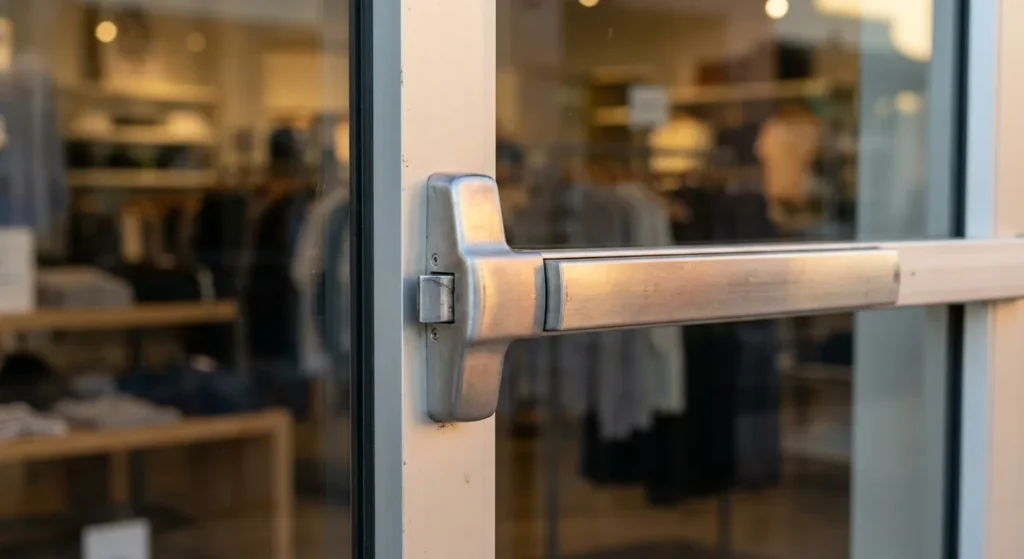
All-glass doors with no metal frame are a separate problem. Those need a rail or a patch fitting added, which means fabrication, not just new hardware.
How Much Does a Panic Bar Cost to Install?
Budget $600 to $1,400 installed for a standard rim device on a hollow metal door that is already prepped. Vertical rod and mortise jobs climb from there.
Job | Typical installed range |
|---|---|
Rim device, existing prep | $600 to $1,000 |
Rim device, new prep required | $900 to $1,400 |
Surface vertical rod pair | $1,200 to $2,200 |
Concealed vertical rod, glass door | $1,400 to $2,800 |
Alarm or delayed egress add-on | $400 to $1,100 |
Those are typical national ranges. Door prep, frame condition, and hardware grade move the number far more than the brand does. Our posted rates for commercial hardware work show what local jobs run.
Signs Your Exit Device Needs Service
Salt air and Lowcountry humidity are hard on exit hardware. Rear exit doors take the worst of it, since they sit uncovered and face weather all year.
- The latch drags or scrapes as the door closes
- The bar feels gritty or sticks partway through its travel
- The door will not latch unless you pull it toward you
- Rust streaks below the latch or at the rod ends
- The top rod latches but the bottom rod misses
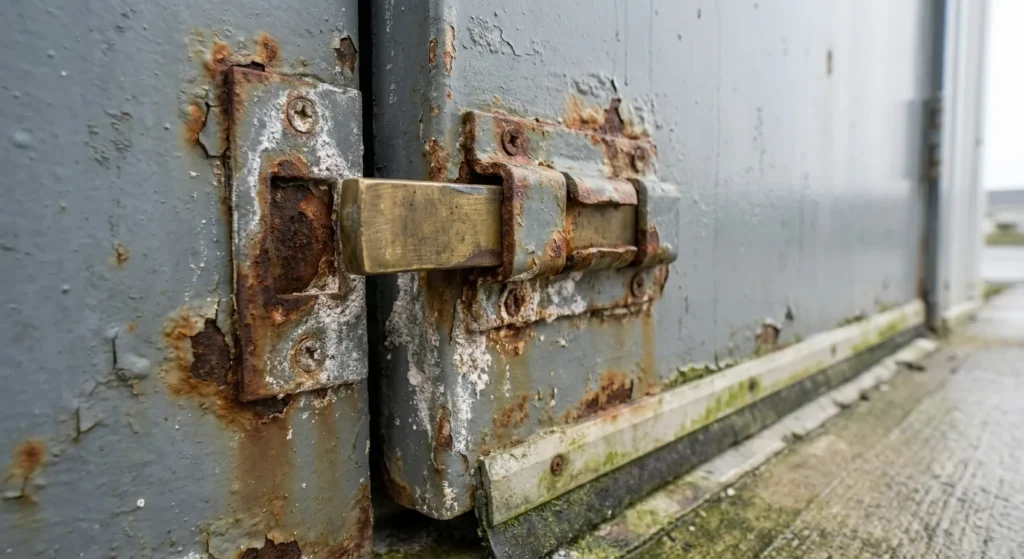
Buildings settle in the local clay, which drops the frame out of square and pulls the strike out of line. A strike sitting a quarter inch off will not catch a latch. Spring pollen coats the moving parts too, and grit plus spring tension chews through the cam.
Small businesses from Knightsville to Oakbrook and the rest of Dorchester County deal with all three problems on the same door. A dragging latch is a warning, not a nuisance. Left alone it becomes a door that fails inspection. If a rear exit sticks shut after hours, an after-hours call gets a tech out the same night rather than the next business day.
Can You Install a Panic Bar Yourself?
Mounting a device on a door already prepped for it is within reach of a handy owner. Templates come in the box and the fasteners are standard. Give yourself two hours and a helper to hold the door.
Cutting new prep is a different job. Prep for exit hardware means through-bolt holes, a latch pocket, and rod channels, all cut square and on layout. A hole drilled an eighth of an inch off ruins a $900 door. Fire-rated doors go further still, since field modification can void the label and fail your next inspection. That is the point to hand it off, and the people who show up to do the work should be able to tell you why before they cut anything. If you want to see how a hardware swap goes on a simpler door, read our walkthrough for taking off an old deadbolt.
Frequently Asked Questions
Exit Device Help for Local Businesses
Knowing what is a panic bar on a door is one thing. Getting the right device onto the right frame, and passing inspection, is another. Older storefronts near Main Street often run hardware installed decades ago, with parts nobody stocks anymore. We measure the opening, read the door label, check the strike, and quote real options instead of guessing. Every tech is background-checked, trained, bonded, and insured. Ask about replacing worn exit hardware on your back door before the fire marshal does it for you.