How to Install a Deadbolt Lock in a Metal Door
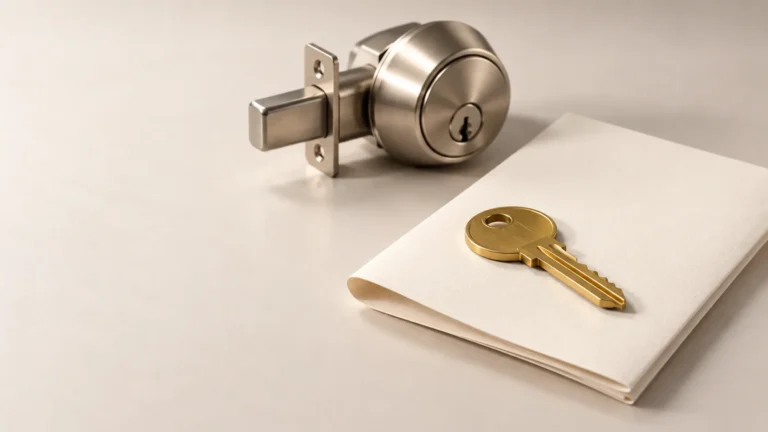
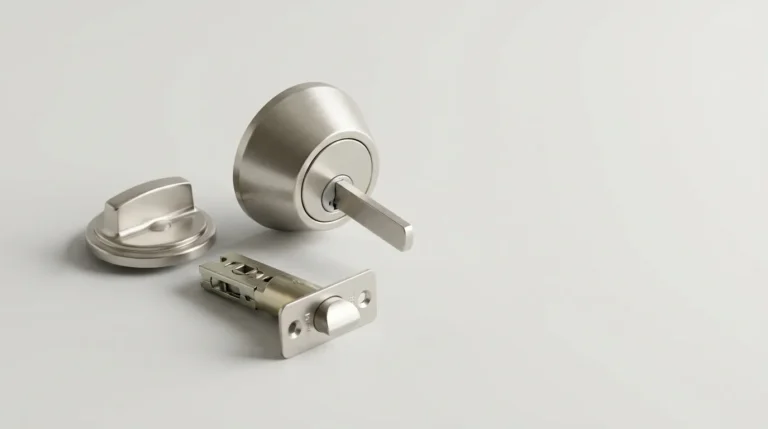
To install a deadbolt lock in a metal door, mark the backset with the paper template, drill the cross bore through the face with a bi metal hole saw, cut the edge bore for the bolt, then mount the cylinder and strike plate. Plan on 60 to 90 minutes. Metal changes three things about the job. You drill slower, you use cutting oil, and you check for a lock block before the bit ever touches the door.
Some hardware stores sell it as a deadlock for a metal door. It is the same thing as a deadbolt.
What You Need to Install a Deadbolt Lock on a Metal Door
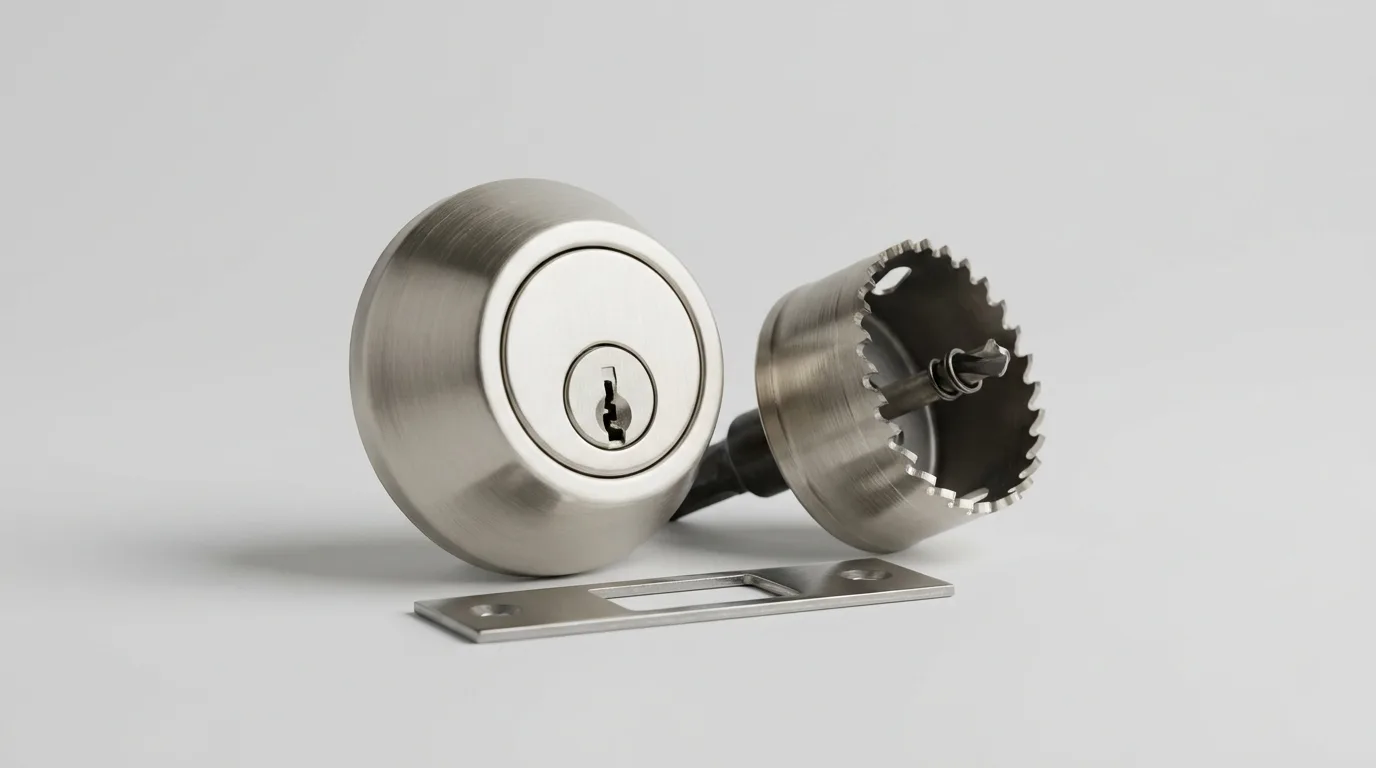
Before you install a deadbolt lock on a metal door, buy bits that actually cut steel. Spade bits and wood augers will not. They dull in seconds and leave a torn hole you cannot repair.
- 2 1/8 inch bi metal hole saw for the cross bore
- 1 inch bi metal hole saw or step bit for the edge bore
- Corded variable speed drill with a 1/2 inch chuck
- Cutting oil or tapping fluid
- Center punch and hammer
- 1/8 inch pilot bit
- Round file for deburring
- Self tapping screws, #8 or #10
- The paper template packed with the lock
- Tape measure and a small square
Check the backset before you buy hardware. Backset is the distance from the door edge to the center of the bore. Residential doors use 2 3/8 inch or 2 3/4 inch. Most deadbolts ship adjustable for both. If you are replacing old hardware, the same measurement matters when you take the old deadbolt off the door.
Is Your Door Hollow Metal, Solid Steel, or Steel Clad?
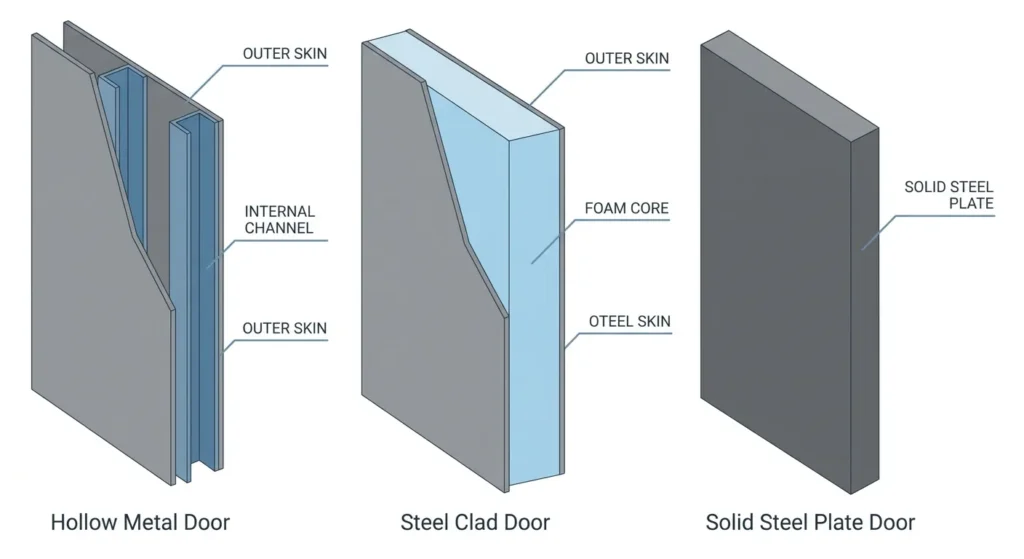
To install a deadbolt in a hollow metal door, you first need to know what is inside it. A hollow door has a thin steel skin over a honeycomb or foam core. The thin skin can crush when you tighten the screws, so the face holes often need a reinforcer or spacer sleeves.
Knock on it. A hollow metal door rings and echoes. A steel clad door with a foam or wood core sounds dull and flat. That one difference decides whether your deadbolt holds or tears free under a kick.
A hollow metal door is two steel skins over an internal frame, with air or insulation between them. Many ship with a factory 161 prep already cut into the edge. Look at the door before you drill anything.
Door type | What is inside | How you drill it | Reinforcement |
Hollow metal (commercial) | Two steel skins, internal channels, air or fiberglass | Pilot first, 250 to 400 RPM, oil every 15 seconds | Lock block or wrap around reinforcer, nearly always |
Steel clad (residential) | Steel skin over polyurethane foam or wood core | Same slow speed, but the core supports the bolt housing | Reinforced strike box with 3 inch screws |
Solid steel security door | Continuous steel plate | Slowest speed, heavy oil, expect 10 minutes per bore | Rarely needed at the door, still needed at the frame |
How to Install a Deadbolt Lock in a Steel Door, Step by Step
Mark the height and backset
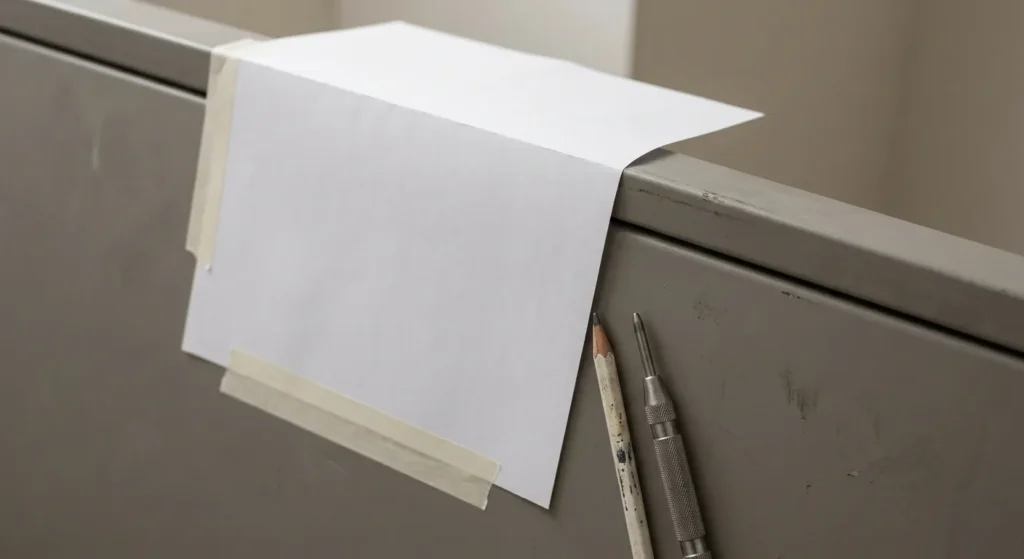
Set the deadbolt 6 to 12 inches above the existing knob. Tape the template to the door face and fold it over the edge, lining the fold up exactly. Mark both bore centers with a pencil, then punch each mark.
Drill the cross bore
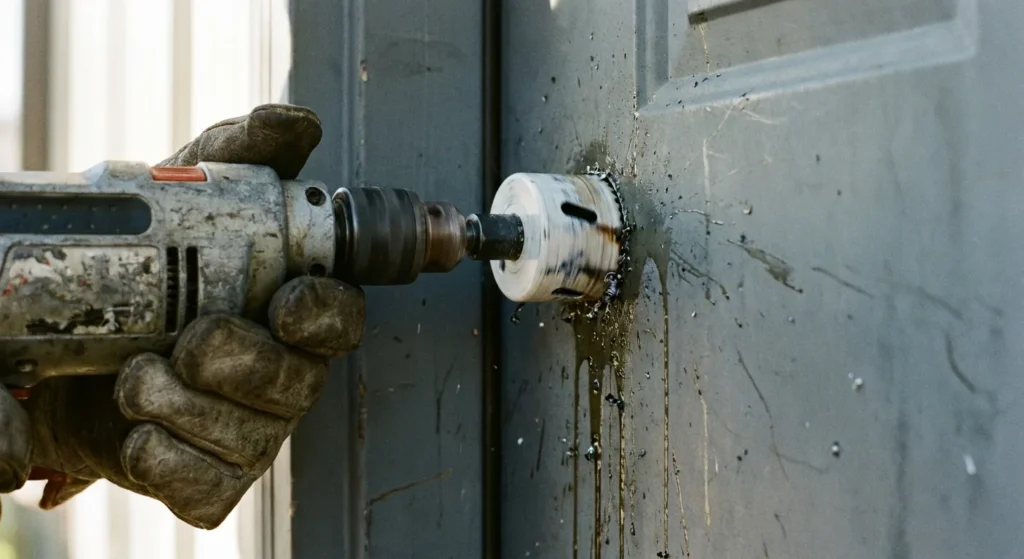
Skip the center punch and the hole saw will skate across the steel and scar the face. Drill a 1/8 inch pilot straight through both skins first. Then run the 2 1/8 inch hole saw at 250 to 400 RPM with steady pressure and constant oil. Stop when the pilot bit breaks through the far skin. Move to the other side and finish the cut from there. Drilling straight through in one pass blows out the back skin and leaves a crater.
Cut the edge bore
Clamp a scrap block against the face as a squareness reference. Drill the 1 inch edge bore into the cross bore, keeping the bit level in both planes. A wandering edge bore is the hardest mistake to correct on steel.
Fit the cylinder and bolt
File every cut edge smooth. Sharp steel burrs shred the bolt housing and your hands. Slide the bolt assembly in with the beveled face pointing toward the jamb. Feed the tailpieces through the bolt drive, seat the outside cylinder, then the inside thumbturn. Tighten the through screws in an alternating pattern, snug only. Overtightening pinches the housing and the bolt binds.
Set the strike plate
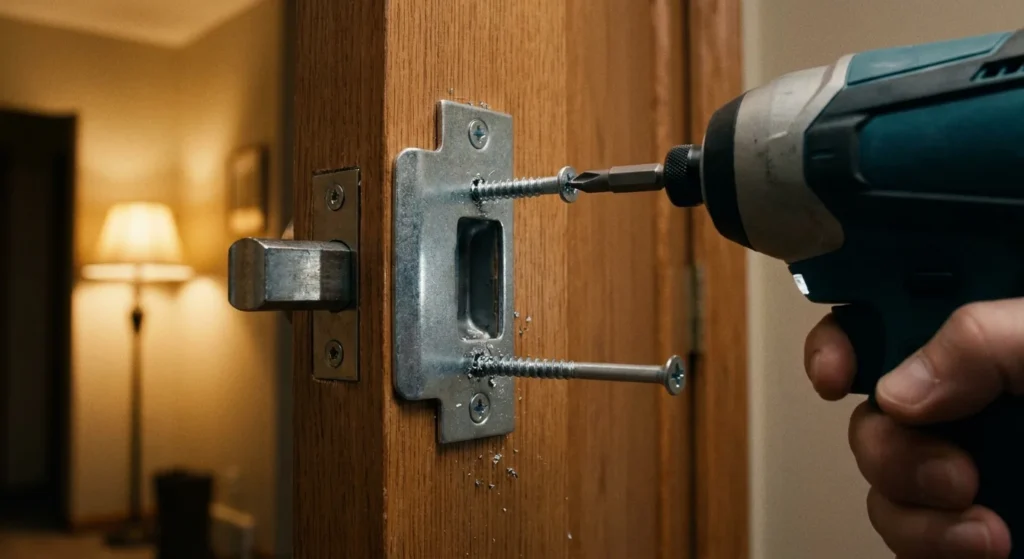
Throw the bolt against the closed door and mark where it hits the jamb. Drill a 1 inch pocket, then file the mortise flat. Steel frames take self tapping screws or a strike reinforcer. Wood frames need 3 inch screws that reach past the jamb into the wall framing.
Test the throw
The bolt should extend a full inch with one smooth turn and no lifting of the door. ANSI/BHMA Grade 1 requires that full 1 inch throw. If you have to pull the door toward you to turn the key, the strike is off by a fraction. A binding bolt also loads the key every time, and a loaded key is how a key snaps off inside the cylinder. Neighborhoods built on this clay soil settle over time, and that settling drags strike plates out of line. File the strike opening slightly rather than redrilling.
What Grade of Deadbolt Holds Up on a Metal Door?
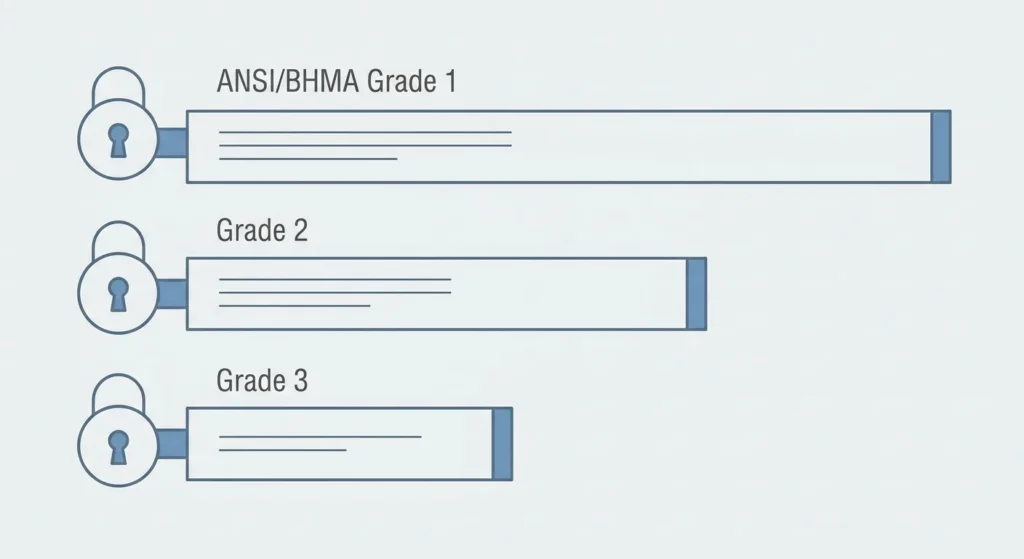
Grade 1. On an exterior metal door, ANSI/BHMA Grade 1 is the only rating worth the drilling time. The Builders Hardware Manufacturers Association sets these grades under ANSI/BHMA A156.36, and the gap between grades is large.
Grade | Door strikes withstood | Key cycles | Where it belongs |
Grade 1 | 10 | 250,000 | Exterior steel, commercial, any door facing the street |
Grade 2 | 5 | 150,000 | Solid residential exterior, lower traffic |
Grade 3 | 2 | 100,000 | Interior or storage only |
Look for a UL 437 listing if you want drill and pick resistance on top of strength. Medeco and Mul-T-Lock cylinders carry it. Schlage B660 and Kwikset 980 are common Grade 1 options that fit a standard 2 1/8 inch prep.
Finish matters more here than inland. Salt air off the coast pits cheap plated hardware within a couple of seasons. Solid brass or stainless holds up far better on Lowcountry doors.
Mistakes That Ruin a Metal Door Installation
- Using a wood spade bit and burning it out in the first skin
- Running the drill fast, which work hardens the steel and welds the saw teeth shut
- Skipping the center punch and letting the bit walk
- Drilling straight through in one pass instead of finishing from the back
- Ignoring an empty cavity where a lock block should be
- Anchoring the strike with 1 inch screws that grab the jamb trim and nothing else
- Cranking the through screws down until the bolt drags
Deadbolt Installation Cost on Metal Doors
The cost to install a deadbolt lock in a metal door tracks four things. Door construction comes first, since hollow doors need a reinforcer that solid doors do not. Hardware grade is second. Strike side work is third, because a steel frame takes longer than a wood jamb. Door count is fourth, and keying several doors alike costs less done together.
Deadbolt installed runs $150 to $300 in this area. Most locksmiths add a service call fee of $50 to $100 on top of the job. See full rates for hardware installation.
When Should You Call a Pro Instead of Drilling It Yourself?
Call someone when the door is fire rated. NFPA 80 requires field modifications to fire door assemblies to follow the manufacturer listing, and drilling outside a listed prep voids the label. That matters on apartment stairwells, shared entries, and any commercial opening.
The other reason is simpler. A mis drilled bore in wood can be plugged and redrilled. A mis drilled bore in steel cannot. You buy a new door. If the door is hollow, fire rated, or already has a damaged prep, the math favors a technician who can bore and mount the hardware in one visit. You can read about the people who handle this work before you book anything.
Frequently Asked Questions
Deadbolt Help Across the Lowcountry
Installing a deadbolt lock in a metal door is a job most handy homeowners can finish in an afternoon. When the bore goes wrong, or the door is hollow, or the frame is steel, a second set of hands saves the door. Our team handles entry hardware upgrades for houses here in Summerville, and every technician is background checked, trained, bonded, and insured. If a bolt jams and shuts you out late at night, we answer then too. Start at our main service page to see what else we cover.
[NAP BLOCK]