How to Open a Jammed Door Lock From the Outside
Learning how to open a jammed door lock from the outside starts with one question: which part is actually stuck? Nearly every jam traces back to three causes. The latch binds against the strike plate. The cylinder seizes from grit or corrosion. Or a worn key no longer lifts the pins to the right height. Each cause needs a different fix. Force the wrong one and a small repair becomes a full hardware replacement. Here is how to tell them apart in about two minutes.
What Does a Jammed Lock Mean?
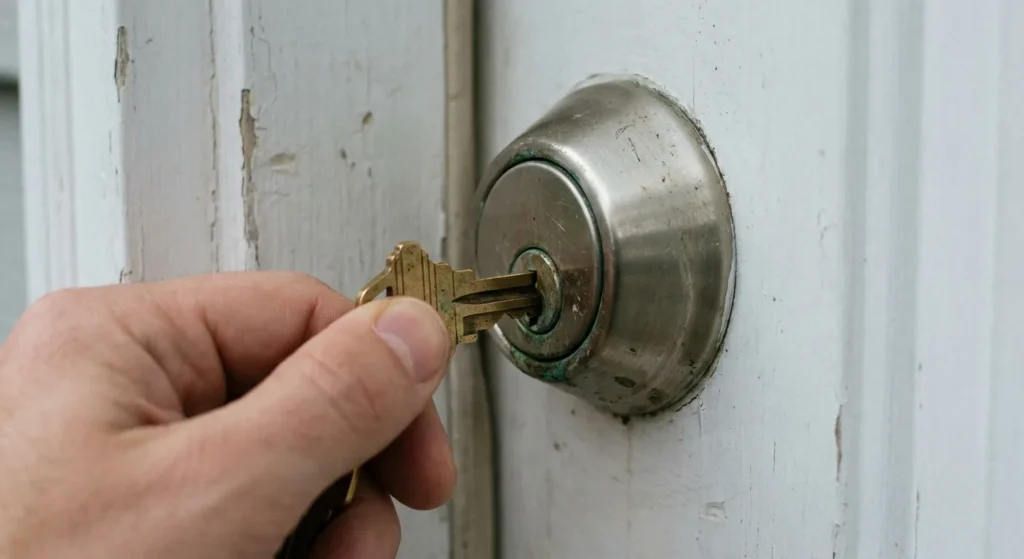
A jammed lock means the key goes in but will not turn, or the bolt will not move. The jam sits in one of two places. Either the cylinder is stuck, with pins held by dirt, rust or a worn key. Or the latch is pressed hard against the strike because the door has shifted. A door can be jammed shut or jammed open the same way. Find which part is stuck before you force anything.
How to Fix a Door Lock That Is Jammed: Diagnose Before You Force It
Figuring out how to fix a door lock that is jammed takes about sixty seconds. Watch what the key does, because the symptom points straight at the cause. Three things can happen.
- The key will not slide in. Something blocks the keyway. Pollen, grit, dried lubricant, or a bent pin.
- The key goes in but will not turn. The cylinder is seized, or the key is worn past its cuts.
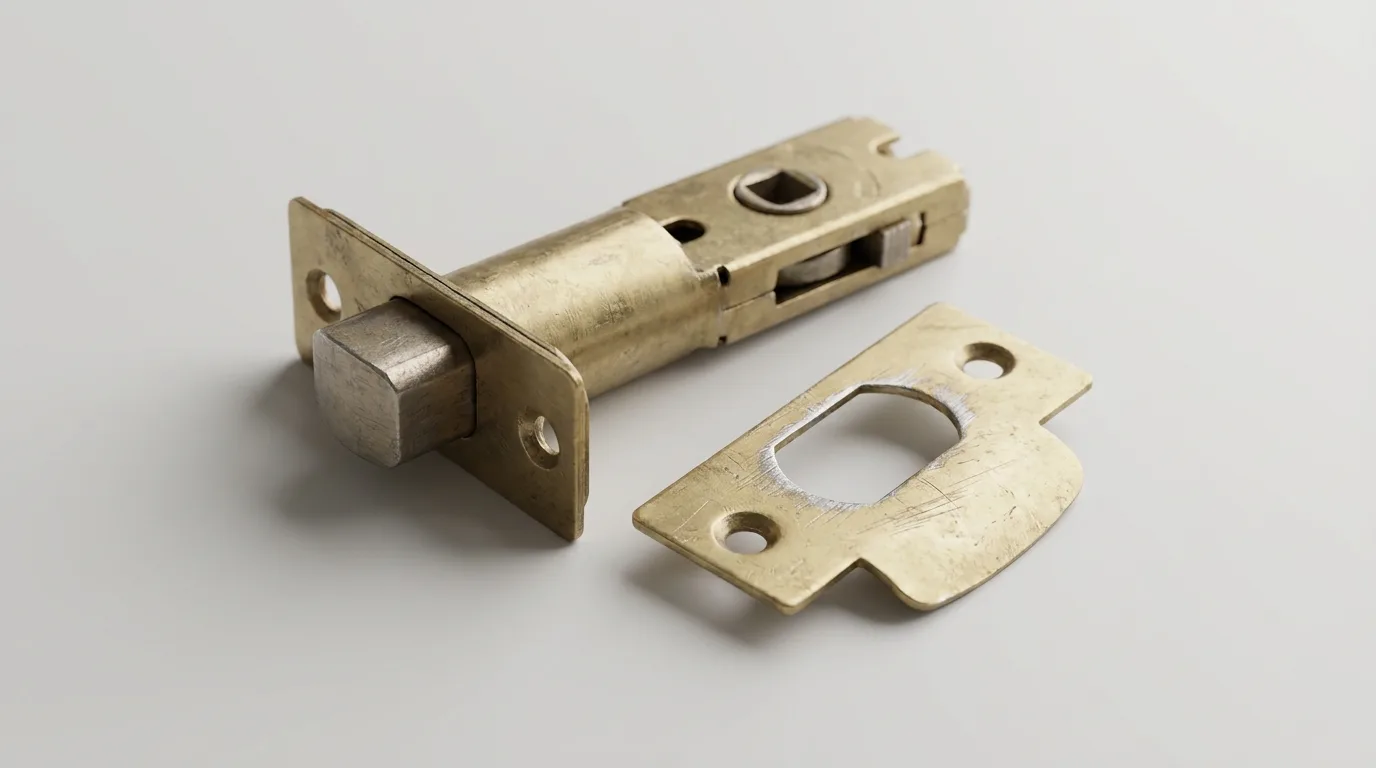
- The key turns but the door will not open. The latch or deadbolt is binding on the strike plate.
That last one is the most common jam in Lowcountry homes, and it has nothing to do with the lock itself.
What you see | Likely cause | Fix it yourself? |
|---|---|---|
Key will not enter | Debris or pollen packed in the keyway | Yes, dry lubricant |
Key enters but will not turn | Seized pins or a worn key | Sometimes |
Key turns but the bolt stays out | Misaligned strike plate | Yes, adjust the plate |
Key turns hard, then stops | Fatigued key metal | No, stop immediately |
Deadbolt grinds in both directions | Corroded cylinder | Usually no |
Knob spins freely | Broken spindle or spring | No, replace the hardware |
Why Door Locks Jam in the First Place
Locks fail from their environment more often than from age. Summerville sits in a humid pocket of Dorchester County, and that moisture works on lock hardware all year.
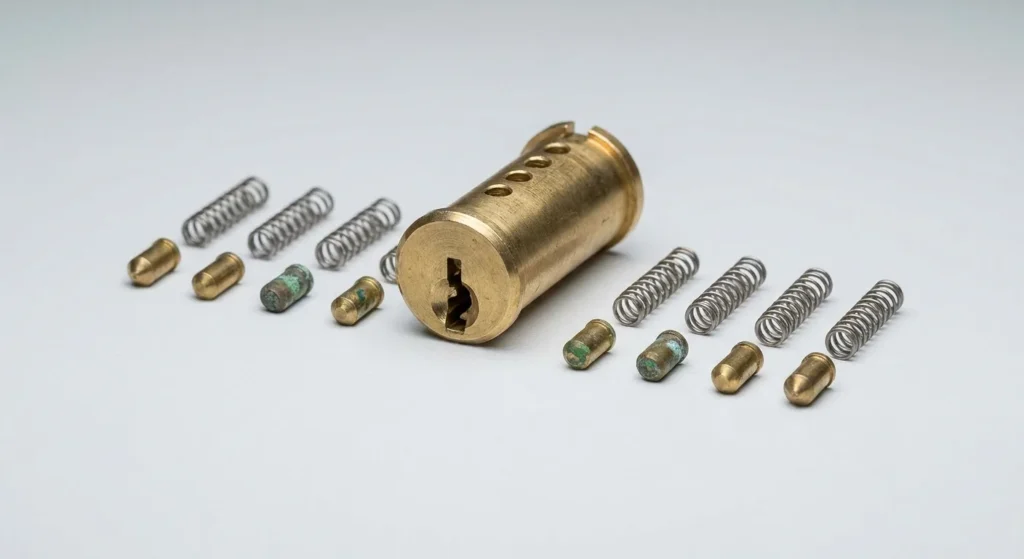
Humid air carries moisture into the cylinder. It settles on the brass pins and springs, then dries and leaves a film behind. Repeat that a few thousand times and the pins start to drag. Homes closer to the coast pick up salt in that air, which speeds corrosion on exterior hardware.
Spring is worse. Pine pollen coats everything here from late February through April. A vertical keyway on an exterior door works like a funnel for it. Mix pollen with old oil based lubricant and you get paste.
Then there is the ground. In older neighborhoods off Old Trolley Road and around the Historic District, decades of settling pull door frames slightly out of square. The strike plate shifts two or three millimeters. The bolt starts catching. Newer subdivisions like Nexton and Cane Bay see the same thing in their first three to five years, while the fill soil compacts.
Hardware grade matters too. ANSI/BHMA rates locks Grade 1 through Grade 3. Grade 1 hardware passes 800,000 cycles of testing. Grade 3, the builder grade found on most new construction, passes 200,000. A Grade 3 knob on a front door in this climate often starts sticking inside five years.
Does humidity make door locks stick?
Yes. Humidity ranks among the top causes of sticking exterior locks in coastal South Carolina. Moisture condenses inside the cylinder, then evaporates and leaves mineral and oil residue on the pin tumblers. That residue builds season after season. Schlage and Kwikset both call for a dry lubricant, because oil traps the same grit it is meant to flush out.
How to Open a Jammed Door Lock From the Outside, Step by Step
If your front door lock is jammed and you are outside, these steps unjam a door lock without breaking it. Work through them in order.
Work through these in order. Stop at the step that solves it.
Take the weight off the door first
Push the door firmly toward the frame, or lift the handle slightly, then try the key. If it turns now, the bolt was binding on the strike plate. This one step clears a large share of jams and costs nothing. Doors sag over time, and the bolt ends up pressing on the edge of the strike opening instead of sliding through the middle.
Work the key gently, and never with pliers
Insert the key fully. Wiggle it up and down two or three millimeters while applying light turning pressure. Light means the pressure you would use on a car ignition, not the pressure you would use on a stuck jar lid.
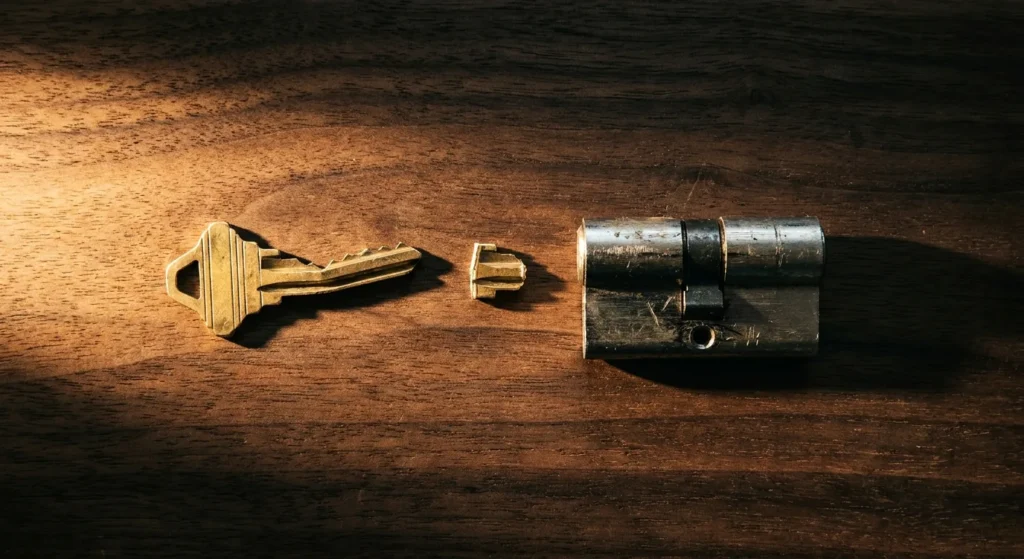
Never put pliers or a wrench on a key. Key blanks are brass or nickel silver, and both are soft metals. The extra force snaps them at the shoulder. Then a key that has broken off inside the cylinder becomes your problem instead of a sticky lock.
Use a dry lubricant, not WD-40
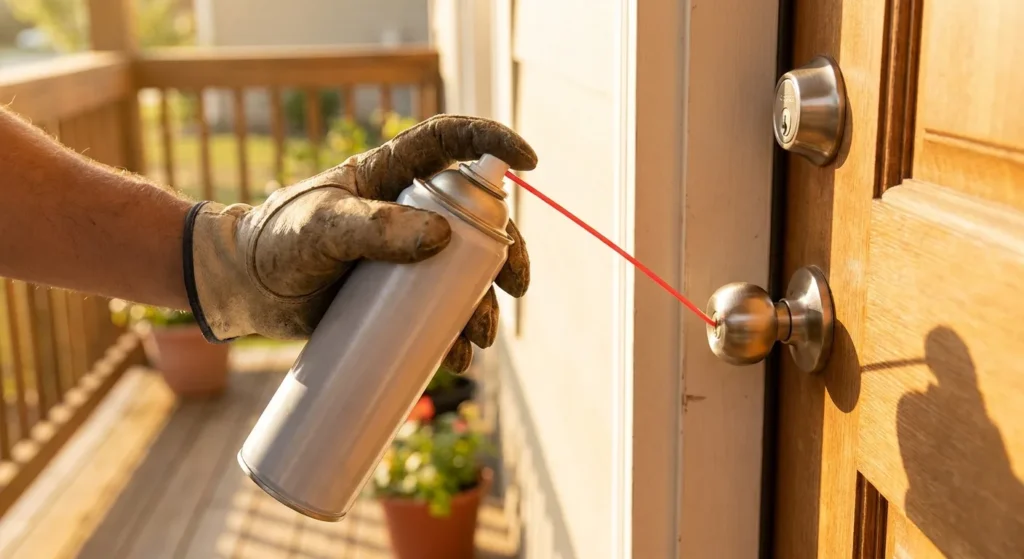
Spray a dry PTFE or graphite lubricant into the keyway for one second. Insert and withdraw the key ten to fifteen times to carry it through the pin chambers. Wait a minute, then try the lock again.
Skip WD-40 and household oil. Both act as solvents. They flush out what lubricant is left, then attract dust and pollen as they dry. Locksmiths see more locks ruined by oil than by neglect.
Check and adjust the strike plate
If the key turns freely but the bolt drags, the plate sits out of line. Close the door and look into the bolt hole. Fresh scrape marks show which direction the bolt is hitting.
Two screws hold the plate. Loosen them, shift the plate two or three millimeters toward the scrape marks, then retighten. If the plate cannot move far enough, file the strike opening slightly larger. Swap the short screws for three inch screws that reach the wall stud while you have it open.
What Do You Do If the Door Lock Is Jammed and You Have No Key?
Call someone. That is the honest answer, and it is not a dodge.
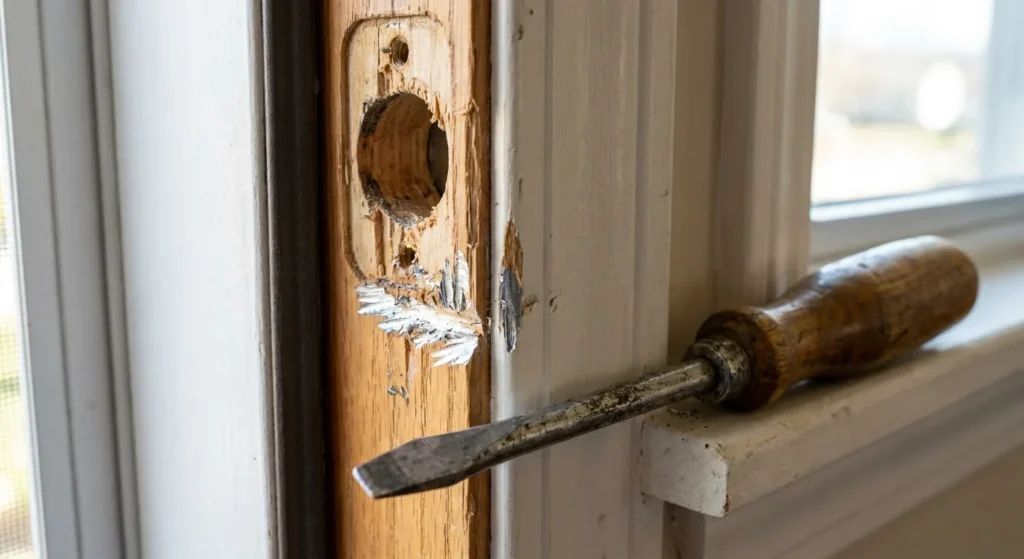
People search how to open a jammed door lock without key constantly, and most of what turns up is either useless or destructive. Credit card tricks only work on angled spring latches with no deadbolt, and they usually ruin the card. Screwdriver methods wreck the cylinder. Drilling scraps the lock entirely, so you own a replacement either way.
A trained technician opens most residential locks without damage, using tools built for that job. Non destructive entry keeps the existing hardware usable, which matters on a keyed alike set. Most shops around here bill a service call in the range of $50 to $100 before parts, so checking what a service call and cylinder work typically run is worth doing before you start improvising. The standards every technician here works to are the same on a stuck knob as on a full lockout.
If the door is the only way in, or a child is shut inside a room, the priority changes. Someone can get you back inside without taking the door apart, at any hour.
How to Open a Jammed Door Lock From the Inside
A door lock jammed from inside usually means the thumb turn will not move the bolt. The same rule applies: take pressure off the latch first. Then try to unlock the jammed lock with slow, light turns, not force.
Interior jams behave differently. A thumbturn deadbolt that will not retract almost always means the bolt is binding, not that the cylinder failed. Lift or push the door and try again first.
Privacy locks on bathroom and bedroom doors use a small spring latch with an emergency release hole in the outside knob. A straightened paper clip or the small tool taped inside the door frame releases it. Push straight in until you feel the button or slot catch, then turn.
If a knob spins freely on both sides, the spindle or the return spring has failed. That hardware needs replacing, not repairing. Taking the old deadbolt off the door yourself is a straightforward job once the replacement is in hand.
When DIY Turns a Jammed Lock Into a Replacement
There is a clear line here, and crossing it multiplies the cost. Stop if:
Stop and call someone if any of these apply
- The key has bent or shows a hairline crack
- You have already used oil and the lock got worse
- The cylinder turns partway, then stops hard
- The door is a fire rated commercial assembly, since modifying one can void its rating
- The lock is a high security cylinder such as Medeco or Mul-T-Lock
Forcing a bound cylinder shears the pins. Once pins shear, no amount of cleaning or rekeying brings the lock back, and the whole cylinder gets replaced. On a keyed alike set, one ruined cylinder means rekeying every other lock in the house to match a new key.
Car doors deserve a mention. Vehicle locks seize in the same humidity, and a jammed car door lock is never worth forcing. The linkage inside the door panel breaks long before the cylinder gives.
Can a jammed lock be repaired instead of replaced?
Often, yes. If the pins are intact and the housing is not cracked, cleaning, lubricating, and rekeying restore a jammed cylinder for a fraction of replacement cost. Locks past saving usually show sheared pins, a cracked case, or corrosion deep in the housing. A technician can tell which one you have in a few minutes.
Frequently Asked Questions
Sticking Locks Are a Local Problem Here
Jammed hardware shows up constantly around here, and the weather explains most of it. Between spring pine pollen, year round humidity, and homes settling into Dorchester County soil, exterior locks take a beating from Knightsville to Oakbrook. Knowing how to open a jammed door lock from the outside handles the easy cases. The rest need proper tools and a trained hand.
Every technician who shows up is background-checked, trained, bonded, and insured. After hours help when a door will not open reaches all three ZIP codes, 29483, 29485, and 29486. Lock repair and entry service throughout the area covers everything from a sticking knob to a full hardware swap.