How to Change the Battery on a Keypad Door Lock
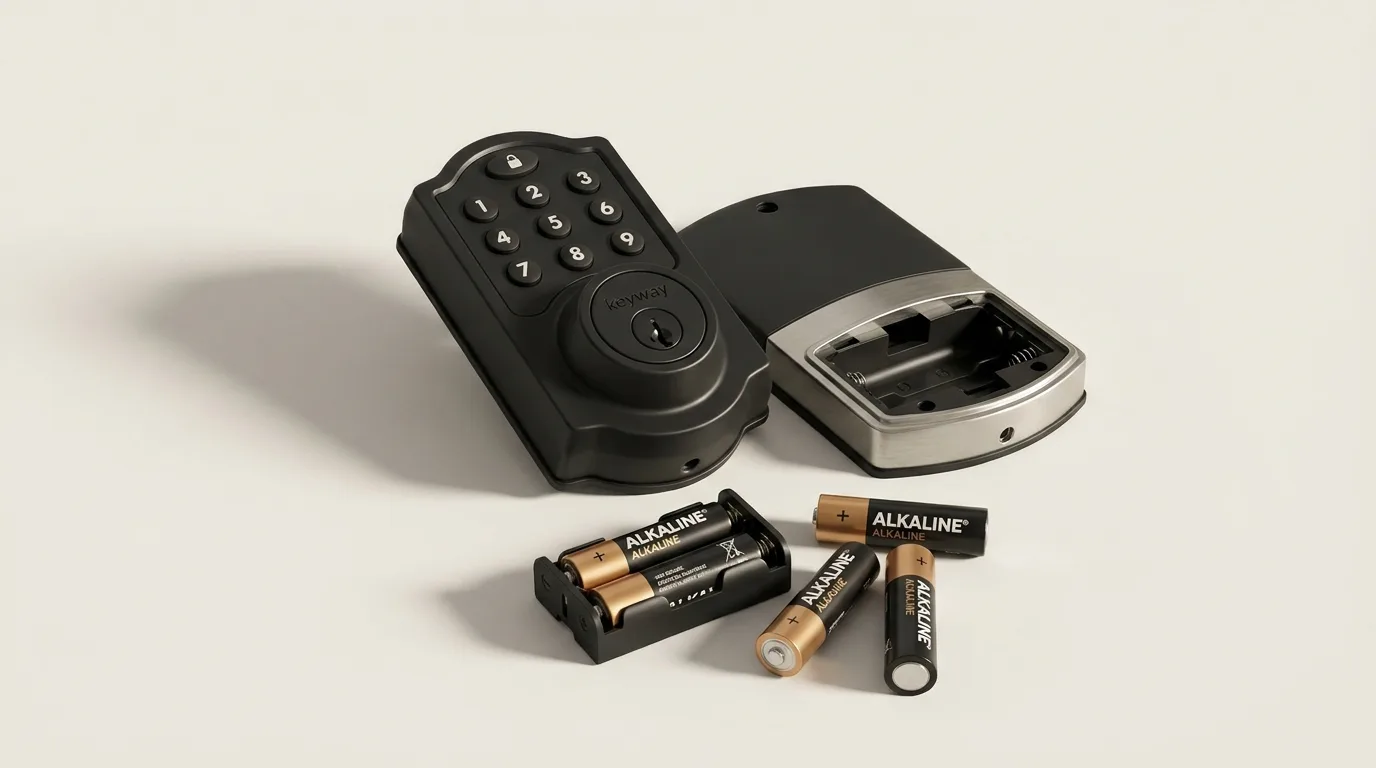
Most keypad door locks run on four AA alkaline batteries. The pack sits behind a cover on the interior side of the door. Pop the cover, swap the cells, close it up. The whole job takes about five minutes and one Phillips screwdriver. This guide covers how to change battery on keypad door lock models from Schlage, Kwikset, and Yale, plus what to do when the lock is already dead.
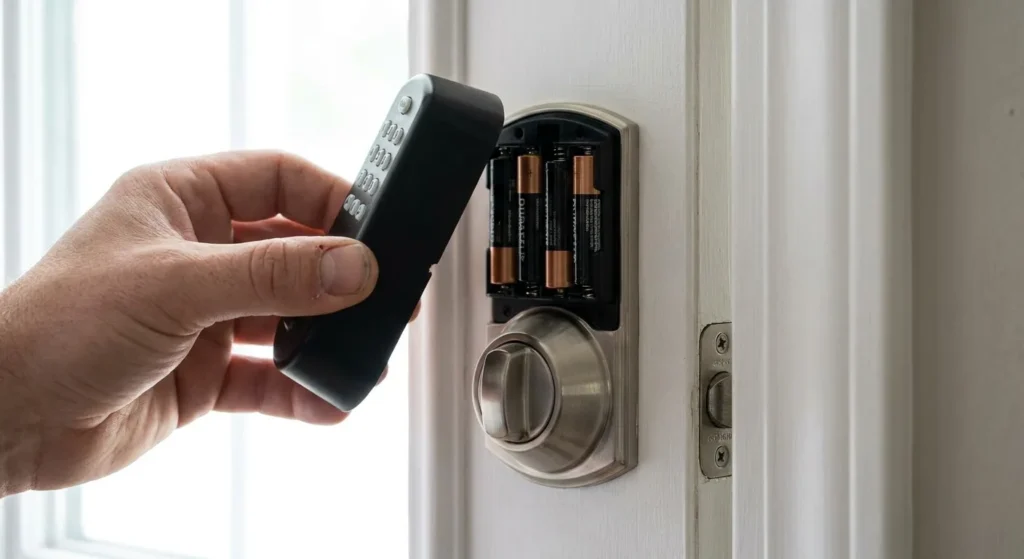
Keypad door lock battery replacement usually takes a few minutes. The steps are the same for most keyless entry locks: open the inside cover, swap the cells, and test the code.
How to Change the Battery in a Door Lock, Step by Step
Learning how to change battery in door lock hardware comes down to six moves. Only the cover design really changes from brand to brand.
What you need:
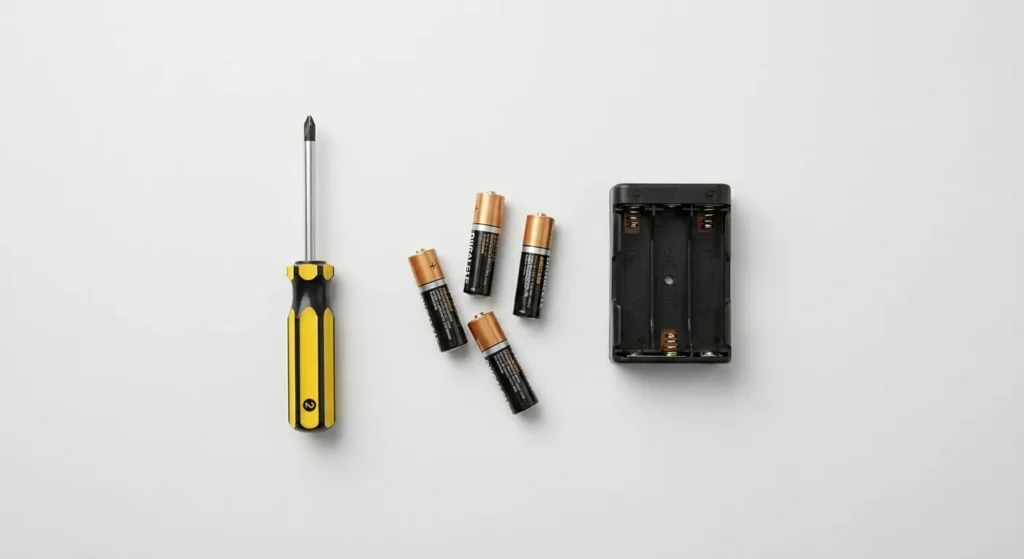
Never mix an old cell with new ones. Yale states that mixed cells can leak and damage the lock body. Skip rechargeable batteries too. They sit below 1.5 volts, so the lock reads them as low from day one. If the cover will not seat flat, check for a pinched wire. Forcing it cracks the housing, and getting your entry hardware checked by a pro costs far less than a full replacement.
Battery Types and Life by Brand
Not every keypad lock takes four AA cells. Older Schlage keypad deadbolts run on a single 9 volt battery instead. Check your model number before you buy anything. Wi-Fi models drain faster, because the radio rarely sleeps for long.
Lock family | Battery | Typical life | Low battery signal |
|---|---|---|---|
Schlage BE365 Keypad Deadbolt | One 9 volt alkaline | About 12 months | Red flashing LED |
Schlage Encode (BE489, BE499, FE789) | Four AA alkaline | 6 to 9 months | App alert and red light |
Kwikset SmartCode 909, 913, 914 | Four AA alkaline | 6 to 12 months | Sluggish keypad, red LED |
Kwikset Halo and Halo Select | Four AA alkaline | 4 to 8 months | Icon and tone at 10 percent |
Yale Assure Lock 2 | Four AA alkaline | 6 to 12 months | Chirps, red light, app alert |
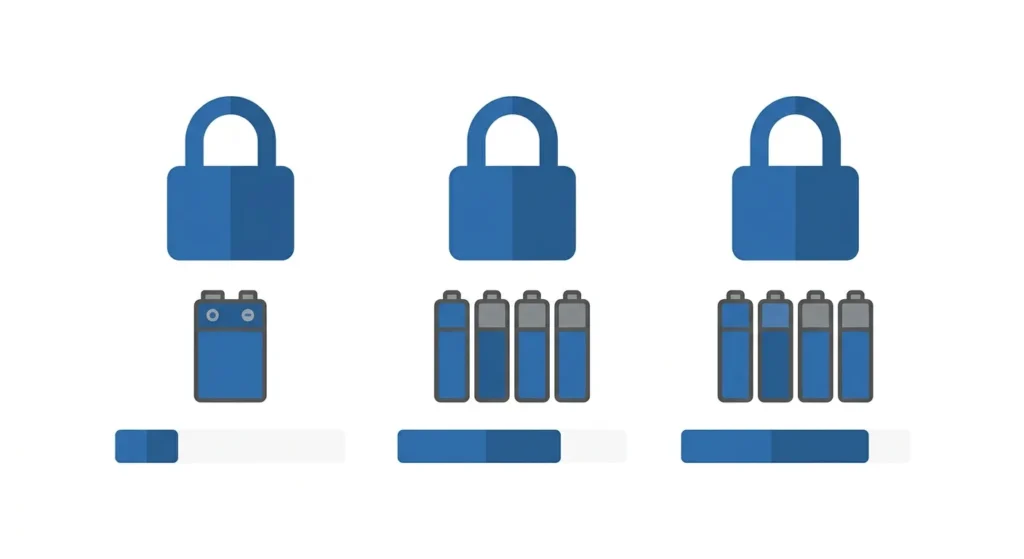
How to Change Batteries in Door Lock Keypads Without Losing Your Codes
You will not lose your codes. Every user code lives in non volatile memory on the circuit board, and that memory holds with no power at all. So how to change batteries in door lock keypads never wipes your programming. Only a deliberate factory reset erases codes, and that needs the programming code printed inside the lock.
Brand Specific Battery Access
Covers differ far more than the batteries do. The core of how to change battery on keypad door lock hardware stays the same across all three brands below.
How to Change Battery on Keypad Door Lock Schlage Models
Schlage splits into two camps, so how to change battery in Schlage door lock hardware depends on your model. On the BE365 keypad deadbolt, two Phillips screws hold the interior cover. Lift it off, unclip the connector, and snap on a fresh 9 volt alkaline. Allegion suggests doing this yearly, on the day you change your smoke alarm batteries. On Encode models, slide the battery holder up and out, turn it around, and fit four AA cells. Schlage advises against lithium and rechargeable cells on both.
How to Change Battery in Kwikset Door Lock Models
Kwikset builds every current model around a removable battery tray. On SmartCode and Halo Touchscreen units, slide the pack upward to release it. Halo Select uses a small tab you press before pulling the pack outward. From there, how to change batteries in Kwikset door lock trays takes two minutes.
The SmartCode 909 has one quirk. Hold the Lock button while you reinsert the pack. That starts the door handing routine, and the bolt cycles on its own within about 30 seconds. It is the one point where how to change battery on Kwikset door lock units differs from the rest.
How to Change Battery on Yale Door Lock Models
Yale Assure locks need a Phillips screwdriver, though how to change battery in Yale door lock covers differs by generation. The screw stays captive, so it will not roll under the door. Slide the cover off, lift out the four AA cells, and drop in a new set. Yale Pro 2 covers pop off with no tool. Yale states that extended life, lithium, and rechargeable cells will not run these locks properly.
August and Wyze Keypad Battery Replacement
On August and Wyze, the keypad is a separate unit from the lock. A dead door keypad battery does not stop your key or the app. The Wyze Lock Keypad runs on 2 AA batteries. The August Wi-Fi Smart Lock takes 2 CR123A lithium batteries. Older August smart locks take 4 AA.
What Happens If the Battery Dies Completely?
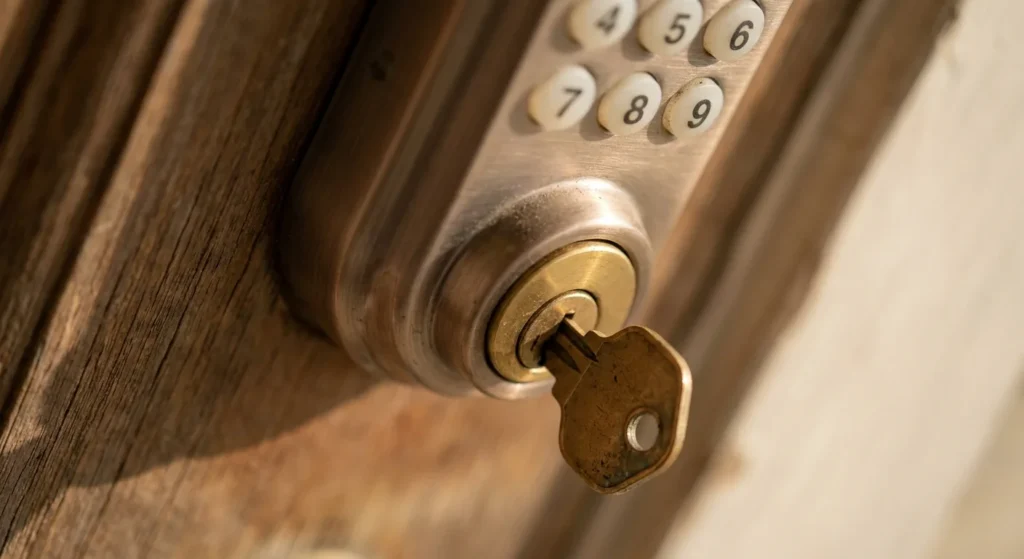
You still have two ways in, and both depend on your model. Most keypad deadbolts ship with a mechanical key override in the cylinder below the keypad. That key turns with zero battery power. Yale touchscreen models add a second option: hold a 9 volt battery against the contacts under the keypad. That feeds enough current to enter your code and open the door.
Key free models have no cylinder at all. If the cells die and nobody has the app, you are stuck outside. Our guide on steps to take when you are shut out of your own house covers the safe options.
How Often Should You Replace Keypad Lock Batteries?
Plan on a swap every 6 to 12 months. Wi-Fi locks land at the short end. A yearly calendar reminder covers most homes.
Two local conditions shorten that window. Salt air drifting inland from the Ashley River leaves a film on battery contacts, and corroded contacts read as a dead battery long before the cells go flat. Wipe the terminals with a dry cloth at every swap. Summer humidity also swells older wood doors, which is common in the Historic District. A swollen door forces the motor to work harder on every cycle.
When a New Battery Does Not Fix the Problem
Fresh cells and a dead keypad point somewhere else. Kwikset states that door alignment is by far the biggest cause of fast battery drain. If the bolt scrapes the strike plate, the motor pulls extra current on every turn. Houses settling into the local clay soil push strike plates out of true within a few years.
Green crust on the contacts means a cell has leaked. That needs cleaning, and sometimes a new tray. A motor that hums without moving the bolt is finished. So is a keypad that registers presses at random.
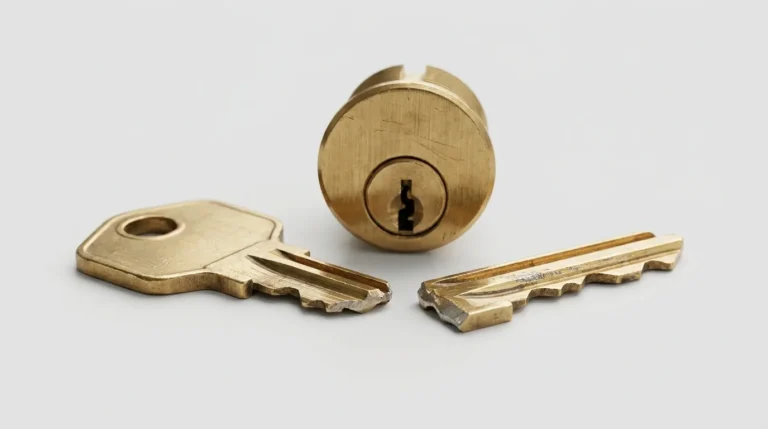
At that point, have the strike plate and bolt alignment corrected rather than buying another four pack. If the override key snapped in a stiff bolt, our post on a key that broke off inside the cylinder explains what happens next. You can also check what a service call runs in this area first.
Frequently Asked Questions
Keypad Lock Help Around Summerville and Dorchester County
A battery swap is a five minute job for any homeowner. A lock that keeps eating cells is a different problem, and it usually traces back to hardware rather than power. If knowing how to change battery on keypad door lock units has not solved yours, a technician can measure the bolt throw and correct the alignment on site. Every technician we send is background-checked, trained, bonded, and insured, and you can read more about how our techs are vetted. Take a look at the full range of lock work we handle, or call and book a visit.