Is Locking Someone Out of the House Abuse? What the Law Says
Locking someone out of the house is abuse when it is used to control, punish, or strip a person of a home they legally live in. By itself, changing a lock breaks no law. The problem is who you locked out. If that person has a legal right to be there, you can face civil damages, a protection order, or criminal charges. This article is general information, not legal advice.
Is It Illegal to Lock Someone Out of Their House?
It is illegal to lock someone out of their house when that person holds a legal right to live there. That right comes from a lease, a deed, a marriage, or from simply having lived at the address long enough to count as a resident. Owning the building does not settle it, and neither does the name on the mortgage.
Courts ask one thing first. Does this person legally occupy the home? If yes, a new cylinder will not remove them. A court order will.
What gives someone a legal right to be in the home
- A signed lease, including an expired one that rolled into month to month
- A name on the deed or the mortgage
- Marriage, when the property is the marital home
- Mail, a state ID, or utility bills at that address
- Paying rent to the owner, even with nothing in writing
- Living there long enough that the owner accepted it
Verbal arrangements count. A partner who moved in two years ago and gets mail at your address in Knightsville has residency, lease or no lease.
When Is Locking Someone Out of the House Abuse?
A lockout turns into abuse when it stops being a property dispute and becomes control. Researchers call this coercive control: using money, housing, or access to isolate a partner. The National Domestic Violence Hotline lists blocking a person from their own home among its warning signs.
Signs a lockout has crossed that line:
- It follows an argument, and access returns once you give in
- Belongings, medication, or ID stay locked inside
- It happens alongside threats, tracking, or control of money
- Children are used as a bargaining chip
- It keeps happening
If you have been shut out and feel unsafe: call the National Domestic Violence Hotline at 1-800-799-7233. My Sister’s House runs a 24 hour line for this area at 1-843-744-3242.
Locking out a spouse, husband, wife, or partner
Neither spouse can lock the other out of the marital home without a court order. Both hold a right of possession, whatever the deed says. After a finding of domestic abuse, Family Court can grant one spouse temporary possession of the residence under S.C. Code Section 20-4-60(C)(3). That order is the lawful route. A fresh deadbolt is not.
An unmarried partner or an ex who never moved out sits in a different spot, but is not unprotected. Someone living there and getting mail there may count as a tenant at will. Removing that ex runs through Magistrate Court.
Can your parents lock you out of the house?
Parents can ask an adult child to leave. They cannot lock them out once that adult child has built up residency. The same process applies, notice first, then court. Locking out a minor child is far more serious. It can be reported to the SC Department of Social Services as neglect or abandonment.
Can a Landlord Lock You Out of Your House?
No. A landlord cannot lock you out of your house in South Carolina, and the penalty is heavy. S.C. Code Section 27-40-660 lets an unlawfully excluded tenant recover possession or end the lease. On top of that, the tenant can collect three months of rent or twice the actual damages, whichever is greater, plus attorney fees.
Cutting off power or water triggers the same penalty. So does taking the door off.
The rule is old. In Sharp v. Kinsman (1882), the state Supreme Court held that a landlord may not eject a tenant by his own hand and must call on the courts.
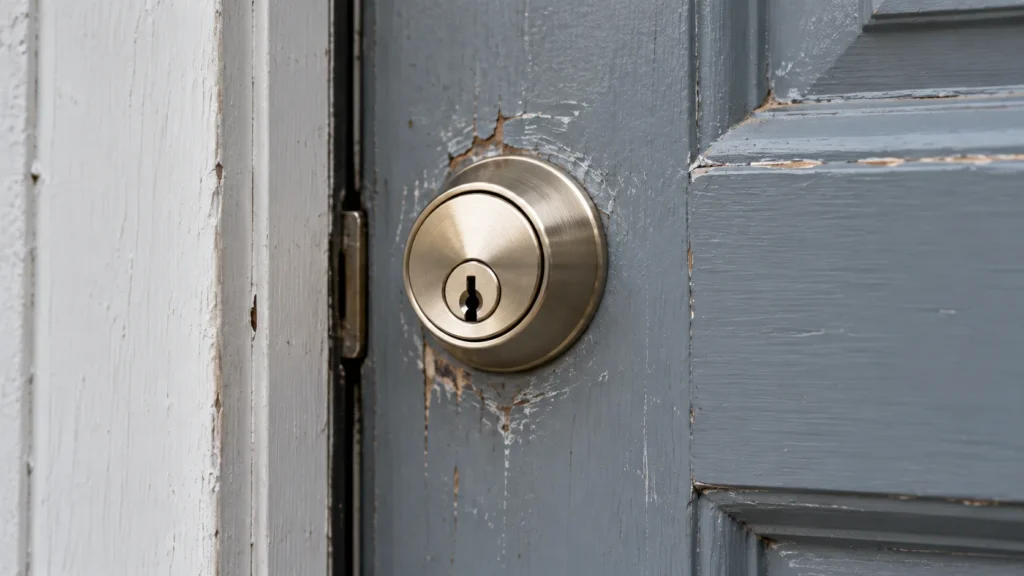
What to do if your landlord locked you out
- Photograph the door, the new hardware, and the date stamp on your phone.
- Ask for access in writing by text or email. Save the reply.
- Call the Dorchester County Sheriff’s Office and request a civil standby.
- File for relief at your county Magistrate Court.
- Keep every receipt for hotels, meals, and any emergency call you paid for.
Those receipts become your actual damages. Tenants skip this step and lose money they could have recovered. If nobody changed the hardware and you are simply stuck outside with no spare key, the fix is far simpler.
Can You Lock a Squatter Out of Your House?
Not on your own. South Carolina bars self help removal even against a person with no lease at all. Changing the locks on an occupied property hands that person a claim against you.
A trespasser passes through. A squatter lives there openly and claims a right to stay. Police can remove a trespasser. Only a court removes a squatter.
The process got faster this year. Governor McMaster signed H.3387 on 30 June 2026, adding Article 3 to Chapter 37 of Title 27. An owner can now file a verified petition with the clerk of court or chief magistrate and get an order removing an unlawful occupant, without a full eviction trial. Current and former tenants are excluded from that fast track.
Adverse possession still takes ten continuous years here, so very few of these cases reach an ownership claim.
Who Can Legally Be Locked Out?
The answer changes with the person. Find your situation in the table.
Who they are | Legal right to be there | Can you change locks alone | What has to happen first |
Tenant on a lease | Yes | No | Ejectment order from Magistrate Court |
Spouse or co-owner | Yes | No | Family Court order under Section 20-4-60 |
Partner, not on lease or deed | Usually yes | No | Ejectment through Magistrate Court |
Adult child living at home | Usually yes | No | Written notice, then ejectment |
Guest who overstayed | Sometimes | Depends | Notice, then a court ruling |
Squatter | No | No | Verified petition under the 2026 ejectment law |
Person named in a protection order | No | Yes | A signed order of protection |
When Can You Legally Change the Locks?
Four situations let you change hardware without a court fight:
- You hold a signed order of protection that names the other person
- You own the home, live alone, and nobody else has residency there
- A writ of ejectment has been served and the occupant has gone
- Your tenant moved out and handed back the keys
Once one applies, move quickly. A rekey resets the pins inside the existing lock and costs less than new hardware. Replacement suits a worn or corroded body, and taking an old deadbolt off the door is straightforward on a wooden frame. Salt air and spring pollen wear cylinders out faster here, so a lock that already sticks and drags often quits right after a rekey. Check what a lock change usually runs first, and a trained tech can rekey every exterior cylinder in one visit.
Do every exterior door, not only the front. People forget the garage service door and the back slider.
What a locksmith asks for before changing your locks
Any honest shop asks who lives at the address. Expect to show photo ID, a deed, a lease, a mortgage statement, or a court order. A company that rekeys a shared home on one person’s word is building a lawsuit for both of you. Worth knowing about the people who show up at your door before you call.
Frequently Asked Questions
Getting the Locks Sorted Once the Dust Settles
Locking someone out of the house is rarely where the story ends. After a court decides who stays, the hardware still needs work. Coastal damp and heavy pollen chew through pin tumblers faster across Dorchester County than inland, so a cylinder that already drags tends to fail within weeks of a rekey. Our techs are background-checked, trained, bonded, and insured, and we confirm who lives at an address before touching a door. Same day rekeys and hardware swaps for Lowcountry homes. Call us, or start at our main page for lock and key work.