What Is a Deadbolt Lock? Types, Grades, and How They Work
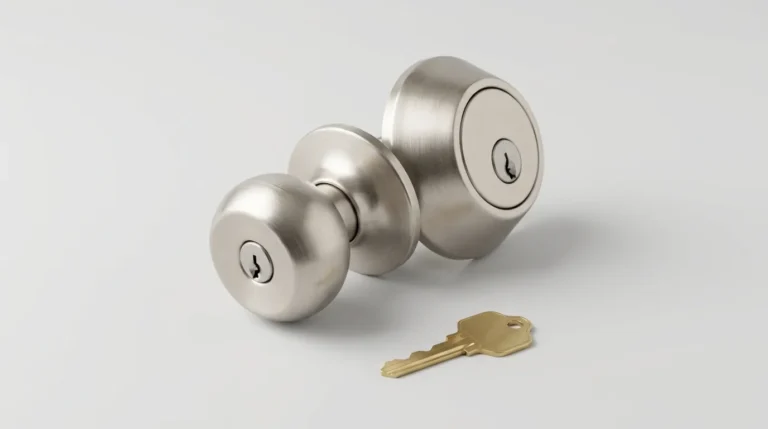
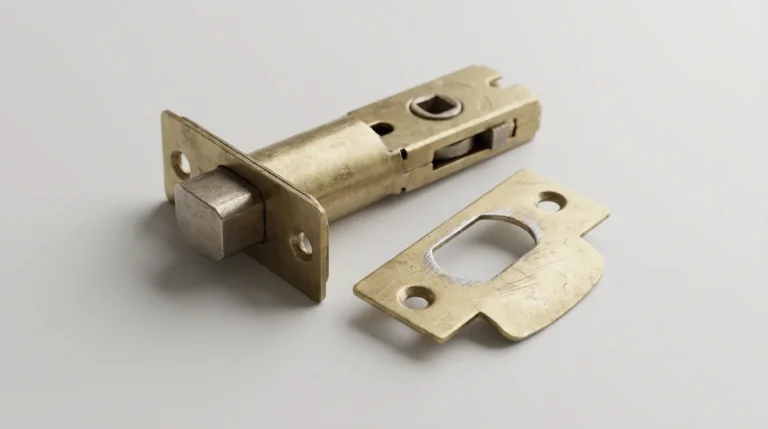
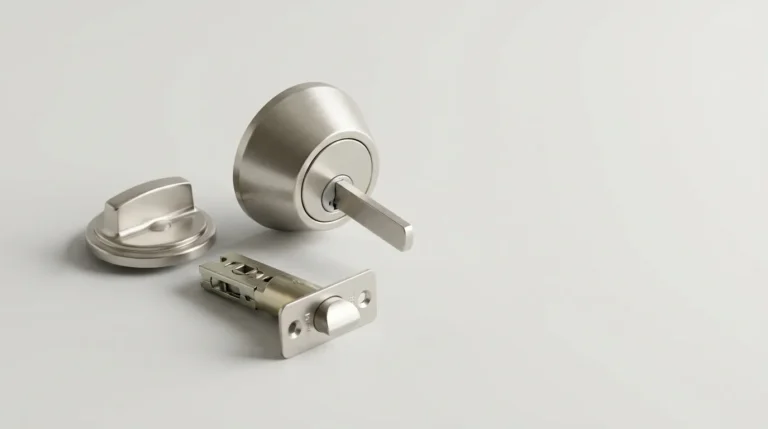
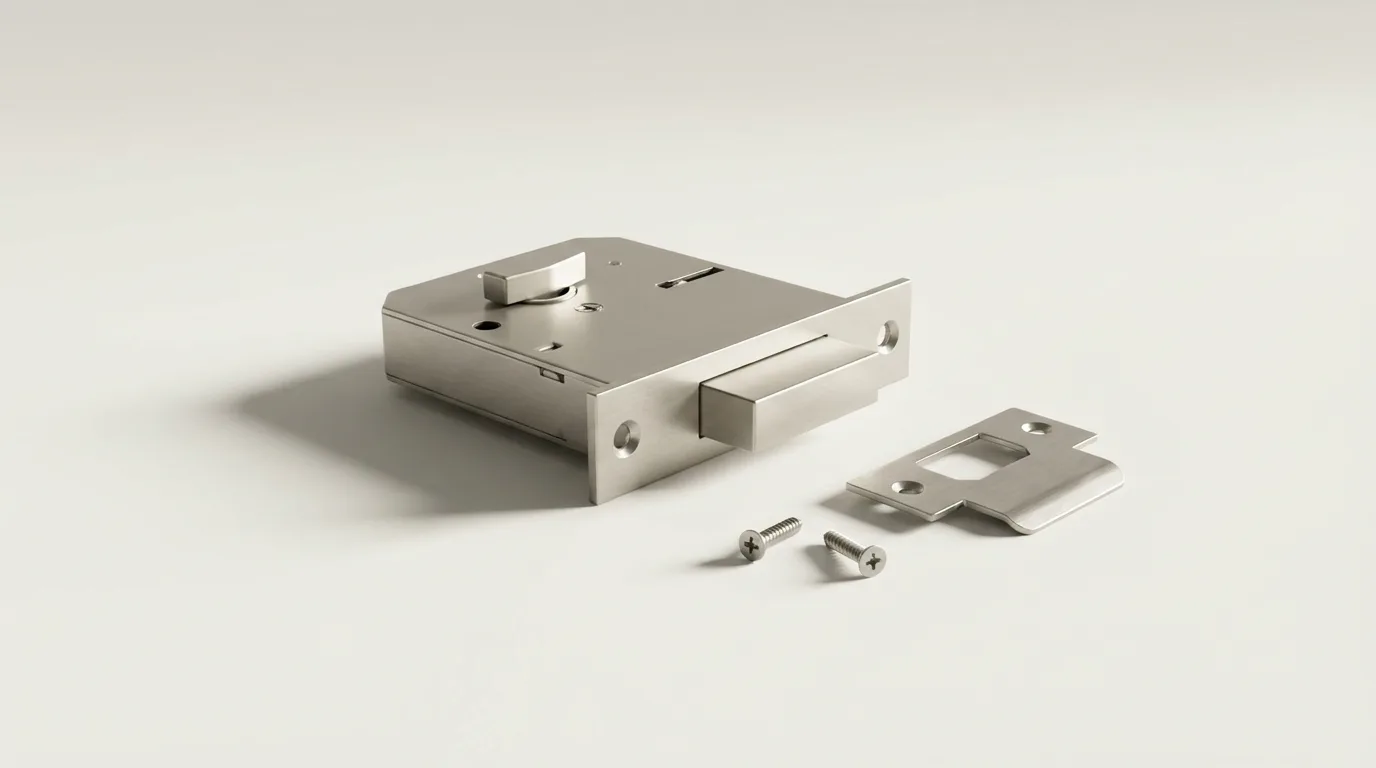
A deadbolt lock is a door lock with a solid metal bolt that slides into the door frame and cannot be pushed back without turning a key or thumbturn. So what is a deadbolt lock doing that a knob lock is not? A knob lock uses a spring latch that retracts under pressure. A deadbolt has no spring. That one difference is why deadbolts hold up against kicks, pry bars, and plastic card shims. Below are the main types, the grades that rate them, and how to tell which one sits on your door.
What Is a Double Cylinder Deadbolt Lock? Deadbolt Types Explained
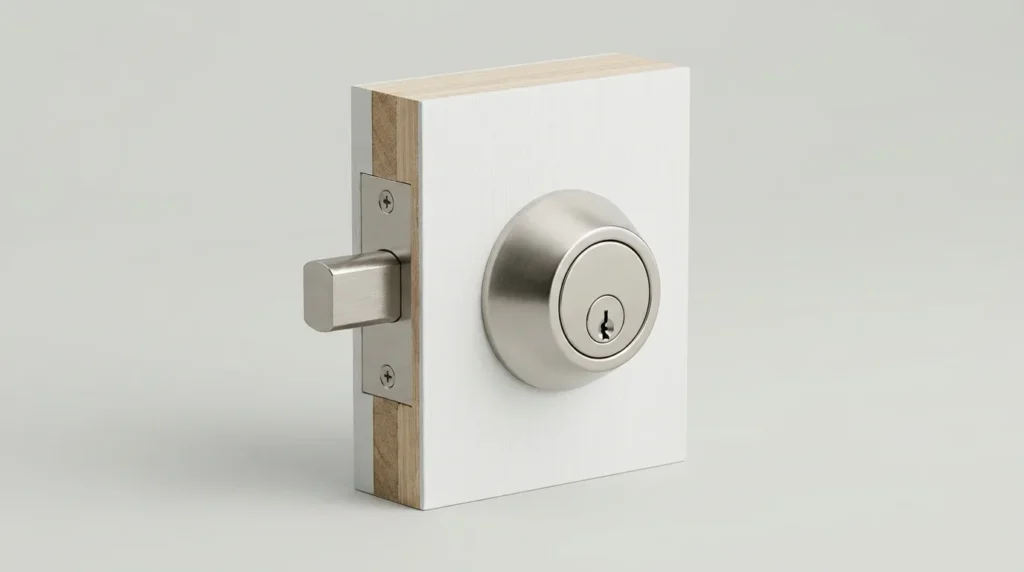
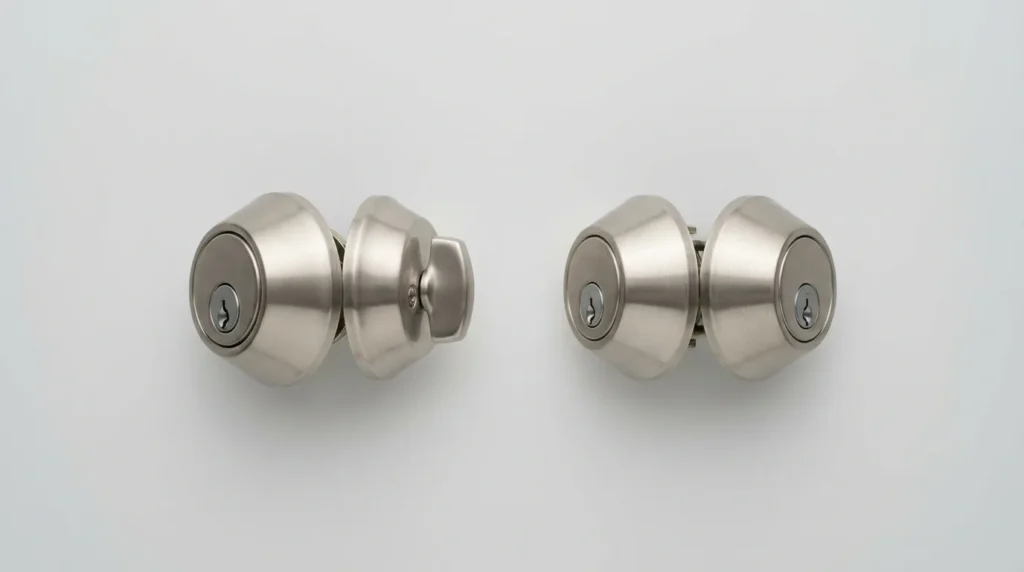
What is a double cylinder deadbolt lock? It is a deadbolt with a keyed cylinder on both faces of the door, inside and out, with no thumbturn anywhere. That is one of four builds you will find on almost every home. What are deadbolt locks otherwise made as? Single cylinder, vertical, and electronic versions cover the rest.
Single Cylinder Deadbolts
The single cylinder is the standard American residential deadbolt. A key works the outside. A thumbturn works the inside. The Schlage B60N and the Kwikset 660 are both this style. Anyone inside can throw or retract the bolt in a second, which matters during a fire. The weak spot is glass. If a sidelight or door window sits within arm’s reach of the thumbturn, breaking that pane hands someone the whole lock.
Double Cylinder Deadbolts
Double cylinder deadbolts answer that glass problem. Since both faces need a key, reaching through a broken pane gets an intruder nothing. The trade-off is real. Nobody leaves without a key in hand. Fire officials object to them on primary exit doors, and building codes often restrict them. Read the code section further down before buying one.
What Is Deadbolt Lock Terminology? Deadlock, Deadlatch, and Night Latch
Names cause real confusion at the hardware counter. British and Canadian catalogs say deadlock. A deadlatch is different again, since it is a spring latch with a small plunger that stops it from being shimmed. A night latch is a surface-mounted rim lock. ANSI paperwork files all of them under auxiliary locks. So a what is deadbolt lock search can return three product names for the same basic part. The plain answer to what is a deadbolt lock stays constant across every label: a bolt with no spring behind it.
Vertical or Jimmy Proof Deadbolts
Vertical deadbolts, often called jimmy proof or Segal style, mount on the surface of the door instead of through it. Interlocking rings pass through a strike ring on the jamb. Prying the frame apart does not separate the bolt from the strike. They show up on apartment doors and older wood doors.
Electronic and Smart Deadbolts
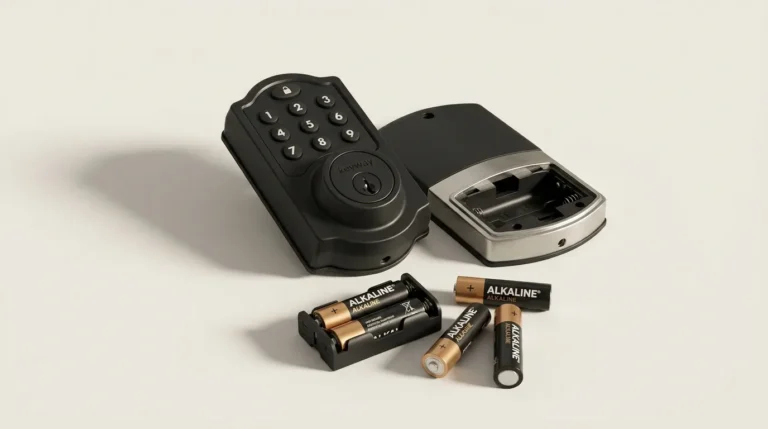
Keypad and app-controlled models such as the Schlage Encode and Kwikset Halo use the same bolt and strike hardware underneath. A motor throws the bolt instead of your hand. Most keep a mechanical key override. Batteries run roughly six to twelve months. If you like your current hardware but want new keys, a technician can swap the cylinder without replacing the whole lock body in about half an hour.
Type | Keyed sides | Best suited to | Egress concern | Installed cost |
Single cylinder | Outside only | Most exterior doors | None | $150 to $300 |
Double cylinder | Both faces | Doors with glass within reach | High, code restricted | $150 to $300 |
Vertical or jimmy proof | Outside only | Apartments, older wood doors | None | $150 to $300 |
Electronic or smart | Keypad or app, key override | Keyless households | None | $195 to $400 |
How Does a Deadbolt Lock Work?
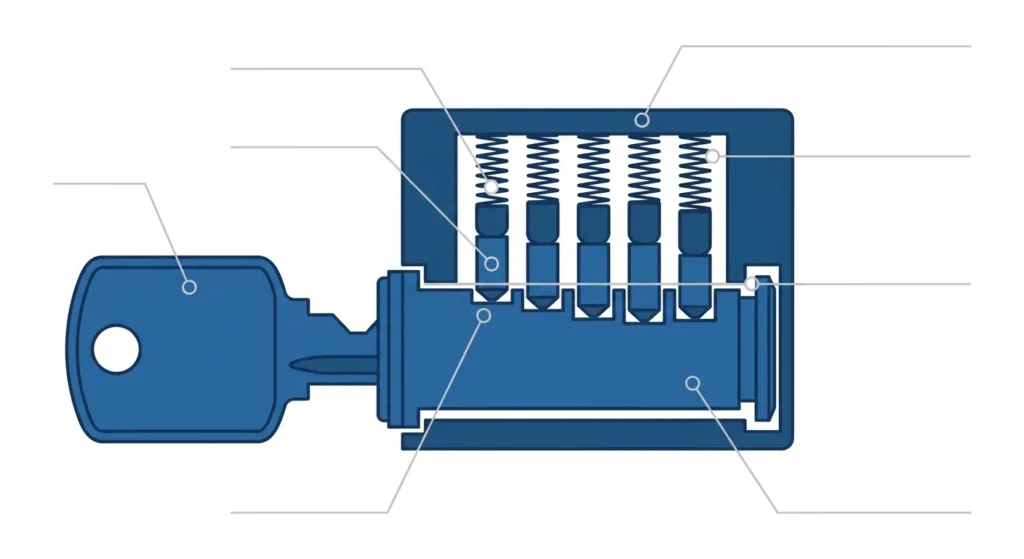
How does a deadbolt lock work? Turning the key rotates the plug inside the cylinder, the plug turns a tailpiece or cam behind it, and that cam drives the bolt straight out into the strike. Nothing springs it back. The bolt stays exactly where the cam left it.
A full-size residential deadbolt throws a bolt one inch deep. The strike plate on the frame catches that bolt. Strike plate screws should reach three inches into the wall stud behind the jamb, not just the soft pine trim. That one detail decides whether a door survives a kick.
What Happens Inside the Cylinder When You Turn the Key?
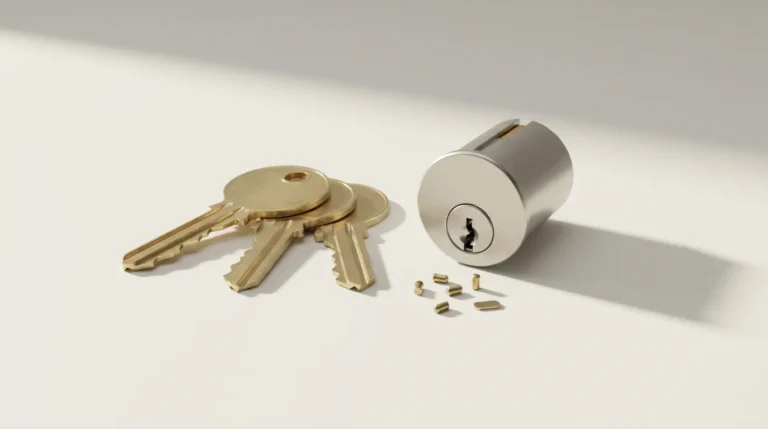
Standard deadbolts use a pin tumbler cylinder. Small spring-loaded pins sit in stacks across the plug. The cuts on the correct key raise every stack to exactly the right height, and the plug turns freely. A wrong key leaves pins crossing that line, so nothing moves.
Understanding how a deadbolt lock works also explains why it fails. Grit, corrosion, and dried lubricant stop pins from settling. That is why a key that used to slide in now needs jiggling.
Deadbolt Grades: What ANSI/BHMA Grade 1, 2, and 3 Mean
Deadbolt strength gets measured, not guessed. The Builders Hardware Manufacturers Association publishes the ANSI/BHMA A156.36 standard for auxiliary locks, and that standard sorts deadbolts into three grades. Grade 1 is the strongest.
Grade | Key turn cycles | Door impact blows | Typical use |
Grade 1 | 250,000 | 10 | Front entry doors, commercial openings |
Grade 2 | 150,000 | 5 | Side doors, back doors, garage entries |
Grade 3 | 100,000 | 2 | Sheds, storage rooms, interior doors |
Grade 1 is commercial-level hardware and costs more. Grade 2 is the practical pick for most exterior residential doors. Grade 3 belongs on a shed or an interior door, never a front entry.
BHMA also runs a separate certification that scores locks A, B, or C for security, durability, and finish. Salt-heavy air makes that finish score worth reading. For cylinders that resist picking and drilling, look for a UL 437 listing instead. Medeco and other high-security brands carry it. Grade ratings measure force. UL 437 measures manipulation resistance. They are not the same test.
Are All Deadbolt Locks the Same Size?
No. Are deadbolt locks universal? Close, but not quite. Most residential deadbolts share the same door prep, so swapping brands usually works. Four measurements decide it:
- Backset: 2 3/8 inches or 2 3/4 inches, measured from the door edge to the center of the bore
- Cross bore: 2 1/8 inches, the large hole through the door face
- Edge bore: 1 inch, the hole drilled into the door edge
- Faceplate: either a round drive-in collar or a square plate about 1 by 2 1/4 inches
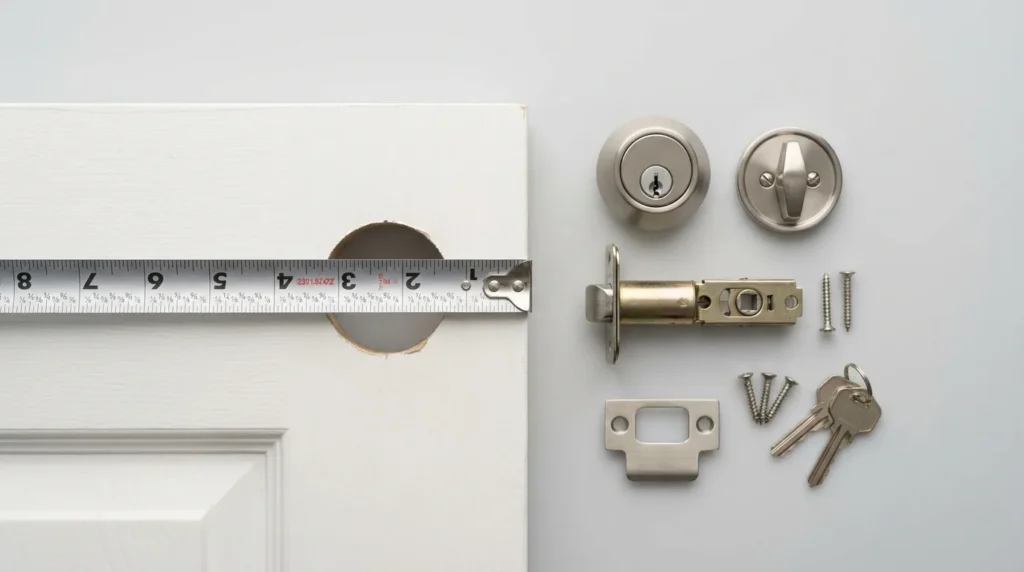
Most Kwikset and Schlage models ship with an adjustable backset that covers both spacings. Trouble shows up with older or imported hardware. If you are pulling an existing unit, getting the old bolt off the door cleanly comes first. Steel doors change the math again, since fitting one to a metal door needs different fasteners.
Are Double Keyed Deadbolt Locks Illegal?
Not automatically, but codes limit where they go. Under the International Residential Code, the required exit door must open from the inside without a key, a tool, or special knowledge. NFPA 101, the Life Safety Code, sets similar egress rules. Double keyed hardware on a main exit door conflicts with that language in most adopting jurisdictions.
South Carolina adopts the IRC through the South Carolina Building Codes Council, and local governments add their own amendments. Rental property rules run stricter again. Call Dorchester County Building Services before installing one, and never put one on a door your family would use to escape a fire.
How Do You Know If Your Deadbolt Needs Replacing?
Five signs say the hardware is finished:
- The key needs jiggling or wiggling before it turns
- The bolt stops short and never reaches full depth
- You have to lift or shove the door to lock it
- The thumbturn spins loose or feels gritty
- Green or white powder shows around the cylinder face
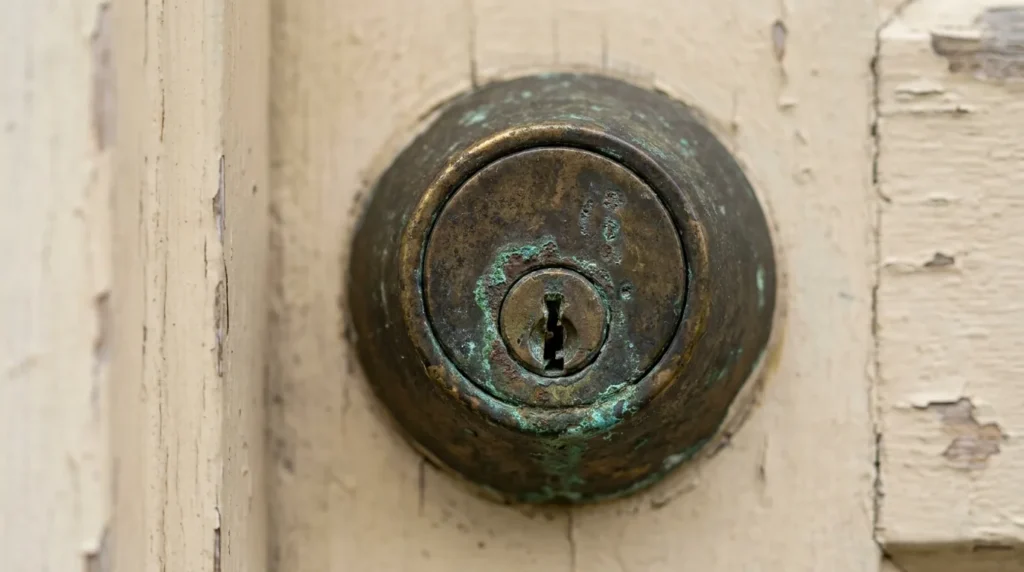
Lowcountry conditions push locks toward all five. Salt air corrodes brass pins and springs. Heavy spring pollen packs cylinders solid. Clay soil settling shifts frames until strike plates no longer line up, and plenty of houses near the Historic District still run original hardware from decades back. Before deciding, check what a deadbolt installation actually runs, since replacement often costs less than repeated service calls.
Frequently Asked Questions
Deadbolt Work Close to Home
The short answer to what is a deadbolt lock never changes. The right one for your door does. Homes across Dorchester County deal with frames that shift and hardware that pits faster than any manufacturer planned for. Upgrading the hardware on an exterior entry door takes about an hour per opening. Every technician on the team is background-checked, trained, bonded, and insured, and you can read more about the people who show up before booking anything. Start from our main service page or call the number below.